


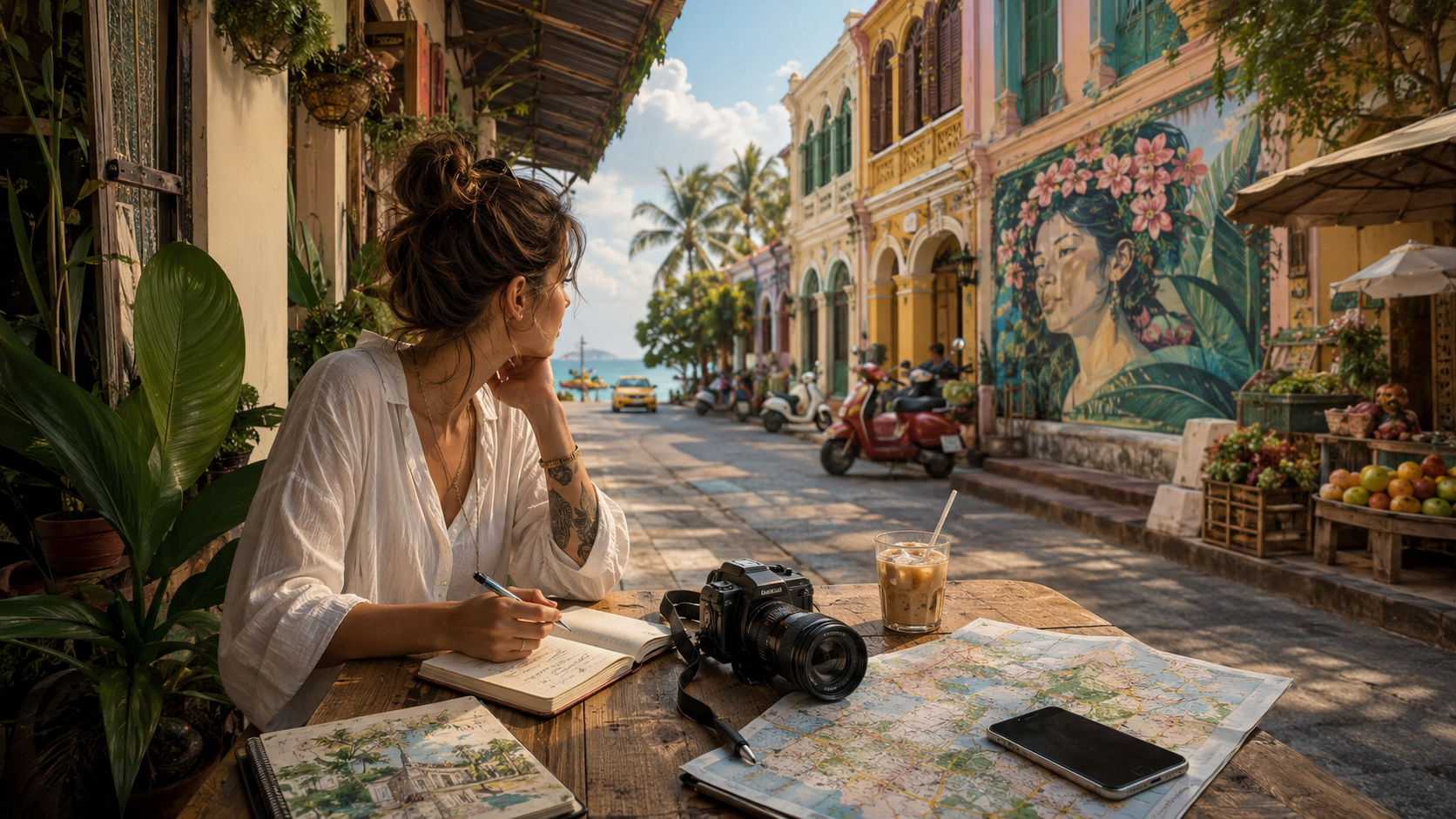
NoHo trains the eye to notice small stages. A brick wall becomes a backdrop. A cafe table becomes a writing desk. A side street can hold a full scene. Phuket rewards that same kind of attention.
Many travelers fly to Phuket for beaches. Creative travelers should look deeper. The island has color, craft, food, street life, and quiet corners that help ideas move again. It gives artists, actors, writers, designers, and curious travelers more than a warm place to rest. It gives them new material.
This Phuket travel guide is for creative travelers who want more than a lounge chair. It shows how to read Phuket like a living set, one street, cafe, mural, and meal at a time.
Why Phuket Speaks To NoHo Creatives
NoHo and Phuket may look like opposites at first. One sits in Los Angeles. The other sits in the Andaman Sea. Yet both places reward people who pay attention.
NoHo has theaters, rehearsal rooms, small stages, and streets full of working artists. Phuket has painted buildings, markets, temples, coastal roads, and cafes where daily life unfolds in plain view. Both places work best when you slow down.
A creative traveler should not treat Phuket as a postcard. The island has layers. A beach can give you silence. A market can give you rhythm. A street mural can give you color. A temple wall can give you shape. A cafe window can frame a whole afternoon.
The key is to travel with purpose, not pressure. You do not need to see everything. You need to see clearly.
Move Through Phuket With A Creative Traveler’s Rhythm
Phuket works best when you treat it like a wide open studio. Each area gives you a different mood. Old Town has painted shophouses, narrow lanes, coffee bars, murals, and small shops with texture in every corner. The west coast gives you beaches, sunset light, and long roads that bend between hills. Inland areas feel quieter. They show you markets, temples, local homes, and green pockets that many visitors miss.
A creative trip needs this range. You may want to sketch in a cafe in the morning, shoot street photos before lunch, visit a market in the afternoon, then watch the sky change over the sea. That kind of day does not fit well inside a fixed tour route. It needs space. It needs pauses.
This is where transport becomes part of the trip. A car can turn Phuket from a list of stops into a flowing route. You can leave early, avoid the thickest crowds, and stop when a scene catches your eye. For travelers who want more control over timing, beaches, viewpoints, and cafe stops, booking rent a car Phuket can make the island easier to explore at a natural pace.
Think of the car as a mobile dressing room for the day. It holds your camera bag, notebook, water, spare shirt, and beach towel. It lets you move from a quiet temple to a noisy market without losing energy. It also helps you reach places that feel less staged, where real island life still sets the frame.
Phuket rewards slow movement, but it does not reward poor planning. Group nearby places together. Keep Old Town for a walking day. Save the coast for longer drives. Leave room for wrong turns, rain, and sudden good light. The best travel scenes often arrive between planned stops.
Start In Old Town Where The Island Shows Its Color
Phuket Old Town gives creative travelers a clear first frame. It feels built for slow looking. The streets are compact. The walls carry color. The shopfronts mix age, paint, food, and craft. You do not need a strict route here. You need good shoes, a charged phone, and time to notice details.
Start early if you can. Morning light sits softly on the buildings. Cafes open their doors. Vendors set up their stalls. The streets feel awake, but not crowded yet. This is the best time to take photos, write notes, or study how the town uses color.
Old Town also helps NoHo travelers feel at home. It has the same layered energy as a small arts district. You see food, design, street life, and performance sharing the same space. A doorway can look like a set piece. A tiled floor can suggest a costume palette. A cafe can become a quiet writing room.
Use the area as a creative warm up. Do not rush from landmark to landmark. Move like you are scouting locations for a short film.
A good Old Town walk can include:
- Street Murals
Look for painted walls, small visual jokes, and local scenes. They give the town its public art pulse. - Sino-Portuguese Shophouses
Study the arches, shutters, columns, and pastel walls. They show how architecture can hold memory without feeling frozen. - Independent Cafes
Choose one with a window seat. Order slowly. Watch how people move through the street. - Local Shops
Step into small stores with textiles, ceramics, prints, or handmade goods. These places often show the island’s taste better than souvenir rows. - Markets And Food Stalls
Follow the smell of grilled food, fresh herbs, and sweet snacks. Food in Phuket often tells a clearer story than a museum label.
Old Town works because it keeps the senses busy. You hear scooters, cups, kitchen tools, and short bursts of talk. You see paint, tile, fruit, fabric, and signs of daily work. For a creative traveler, that mix is fuel. It gives you images to carry into the rest of the island.
Use Cafes As Quiet Creative Rooms
Phuket cafes can do more than serve coffee. They can reset the day. They give you shade, a table, a plug, and a small pause between busy streets and hot roads. For a creative traveler, that pause matters.
In NoHo, a cafe often becomes a second office. You read scripts there. You edit photos there. You meet people there. Phuket can work the same way, but with a different rhythm. The air feels slower. The light changes faster. The street outside may carry scooters, rain, incense, and the smell of lunch.
Choose cafes with care. A loud place may work for people watching. A quiet place may help you write. A window seat can frame the street like a stage. A back table can help you focus. Bring a notebook and stay long enough for one clear thought to land.
A good travel cafe is not just a stop for coffee. It is a small room where the trip starts to explain itself.
Use each cafe for one task. Write a scene. Sort photos. Sketch a doorway. Plan the next stop. Send one message. Do not turn the whole day into laptop time. Phuket gives you better material outside the screen.
The best cafe breaks often come after a walk. Your mind has already gathered color, sound, faces, and texture. Sitting down helps those pieces settle. That is when a rough idea becomes a real note. That is when a photo series starts to show its shape.
Keep the order simple: walk first, sit second, create third. This rhythm keeps the trip active without making it rushed.
Look Beyond The Beach For Local Culture
The beach matters in Phuket, but it should not take the whole trip. Creative travelers gain more when they mix coast with culture. A perfect day might start with a swim, move into Old Town, pause in a cafe, then end at a market where smoke rises from food stalls.
Local culture often appears in small details. Watch how vendors arrange fruit. Notice how temple roofs cut into the sky. Listen to the sound of rain on metal awnings. Look at how color works on walls, signs, fabrics, plates, and flowers.
These details help you avoid flat travel memories. They give your work texture. A writer may find a scene in a crowded stall. A designer may find a palette in a row of shophouses. A photographer may find a story in one quiet corner.
Phuket does not need to shout to be useful. It asks you to look longer.
Conclusion: Let Phuket Give The Work New Air
A creative trip does not need to be packed. It needs contrast. Phuket gives you that contrast in plain, useful forms: a bright street, a quiet cafe, a long coastal road, a market smell, a temple wall, a sudden rain shower, and a sunset that changes the whole day.
For NoHo travelers, the island can feel both far away and familiar. It has the same creative pulse that makes an arts district work. People gather, make, cook, perform, sell, talk, and move through shared space. The setting changes, but the habit stays the same: look closely, listen well, and let the place shape the work.
Do not treat Phuket as a checklist. Treat it as a field notebook. Walk through Old Town. Sit in cafes. Follow color. Drive with care. Leave gaps in the schedule. The strongest ideas often arrive when the day has room to breathe.
Phuket will not create for you. No place can. But it can clear the noise, sharpen the eye, and hand you better raw material. For a creative traveler, that may be the best reason to go.