


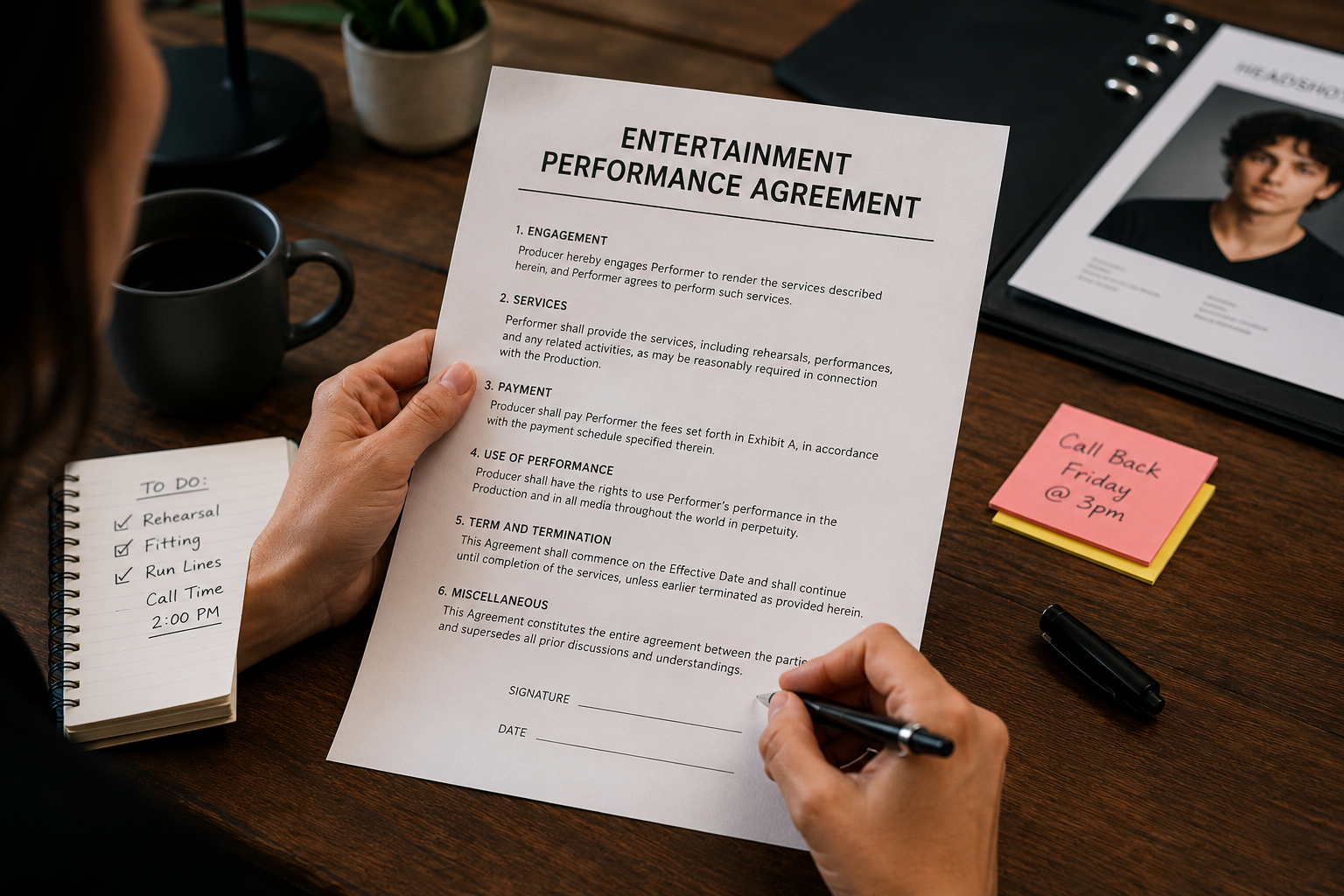
Signing a performance contract can feel exciting. Someone wants your talent, your time, and your creative work. Maybe you’ve booked a stage role, voiceover job, dance performance, live set, or independent gig. That’s a big moment.
But a contract isn’t just paperwork. It decides how you’ll get paid, what rights you’re giving away, who owns recordings, and what happens if plans change. Before you sign, slow down. Read every page. The fine print can affect your income, reputation, and future work.
Make Sure the Work Is Clearly Defined
Your contract should explain exactly what you’re being hired to do. One of the main reasons to hire an entertainment contract lawyer is to make sure you don’t miss what may be the most obvious. A stage actor may be asked to rehearse, perform, attend promo events, or appear in recordings. A voice actor may need to record pickups or alternate takes. A dancer may attend fittings or appear in video clips. A musician may need to rehearse, soundcheck, and allow live recordings.
Vague phrases like “related services” or “additional promotional support” can create problems later. Look for clear answers:
- What services are included?
- How many sessions, shows, or appearances are required?
- Are rehearsals, edits, pickups, or fittings paid?
- Can the producer add duties without extra pay?
Clear terms help you avoid confusion once the project starts moving fast.
Payment Terms Need More Than a Fee
A contract may say you’ll be paid $1,000. That’s a start, but it’s not enough. You need to know when you’ll be paid, how payment will arrive, and whether any conditions apply.
“Within 30 days of performance” is clearer than “after completion.” Be careful with terms that delay payment until producer approval, release dates, or outside funding. That can leave you waiting far too long.
Also check expenses. Travel, parking, lodging, meals, costumes, makeup, gear transport, and studio time can eat into your fee. If you’re expected to cover those costs, the contract should say so.
Usage Rights Can Follow You for Years
Usage rights control how your performance can be used after the job ends. This is extremely important for actors, voice artists, dancers, musicians, and anyone whose image, voice, or performance may be recorded.
A voiceover may start as a small online ad, then get used on radio, TV, streaming platforms, paid ads, or social media. A live performance may be filmed and reused in promotional content. A musician’s set may be posted or licensed later.
Watch for broad language like “in all media, worldwide, in perpetuity.” That can mean your work may be used anywhere, forever, with no extra approval or payment. Sometimes that’s acceptable. Many times, it’s too much.
Your contract should explain where, how, and for how long your work may be used.
Exclusivity Can Limit Future Jobs
Exclusivity clauses can stop you from taking other work. A brand may not want your voice used for a competitor. A theater company may need to avoid schedule conflicts. A venue may not want a musician playing nearby right before a show.
The key is scope. The contract should state what work is restricted, where the restriction applies, and how long it lasts.
A two-week limit in one city may be reasonable. A one-year limit across a whole industry may hurt your income. If someone wants to limit your future work, the pay should reflect that.
Cancellation and Rescheduling Terms Matter
Performances get canceled. Sessions move. Venues close. Funding falls through. Illness, weather, travel delays, and production changes can throw everything off.
Your contract should explain what happens if the project is canceled or rescheduled. Do you still get paid? Is there a kill fee? How much notice must the producer give? Are you required to hold future dates?
Without clear terms, you may lose income after turning down other jobs. That can be extremely stressful. A fair agreement should protect your time and your calendar.
Recording, Filming, and Social Media Clauses Need Care
Many performers think they’re being hired for one event or session. Then cameras appear.
The agreement should say whether recording is allowed, who owns the footage, who can edit it, and where it may appear. This includes behind-the-scenes clips, rehearsal footage, promo reels, livestreams, and social media posts.
A short clip can travel fast online. It may be reposted, turned into an ad, or used in a way you didn’t expect. If your image, voice, choreography, music, or performance style appears in that content, you should know the plan before you agree.
Credit and Promotion Should Be Written Down
Credit can help your career. It helps casting directors, producers, agents, and future collaborators find you.
Your contract should say how your name will appear. Check spelling, stage name, pronouns, and title. Also ask where the credit will be listed, such as programs, posters, websites, film credits, streaming pages, album notes, or social posts.
Promotion duties should also be clear. If you’re expected to post about a show, attend interviews, share ticket links, or create content, the agreement should set limits. Otherwise, promotion can turn into unpaid labor.
Watch for Ownership and “Work Made for Hire” Language
Some contracts transfer ownership of creative work. This may affect original music, choreography, scripts, character work, recordings, improvisation, voice files, likeness rights, and other creative contributions.
A “work made for hire” clause may mean the hiring party owns the work from the start. An assignment clause may transfer your rights. A license may let someone use your work while you keep ownership.
These words matter. You should know whether you’re selling one performance, licensing limited use, or giving away broader rights.
Also ask whether you can use clips for your reel, portfolio, auditions, website, or grant applications. Many performers need samples to grow their careers.
Dispute Terms Can Shape Your Options Later
No one signs a contract expecting a fight. Still, disputes happen. Payment may arrive late. Footage may be used beyond the deal. A producer may cancel without paying. A performer may be accused of breaching the agreement.
Check the dispute section. It may decide which state’s law applies, where claims must be filed, whether arbitration is required, and whether attorney’s fees can be recovered.
Pay attention to deadlines, too. Some contracts require fast written notice. Missing that step can hurt your position.
Slow Down Before You Sign
Performance contracts can feel intimidating. Some are packed with legal terms. Others look casual but still carry serious consequences.
Read every page. Save emails, drafts, deal memos, text messages, invoices, and payment records. Make sure the written agreement matches what you discussed.
Focus on the terms that affect you most: pay, scope of work, usage rights, exclusivity, cancellation, recording, ownership, credit, safety, and disputes.
If something feels unclear or one-sided, pause. Asking questions doesn’t make you difficult. It makes you careful.
Get Legal Help Before the Fine Print Becomes a Problem
Your talent deserves protection. So does your time, your name, your image, and your creative future. A performance agreement can affect your income and reputation long after the job ends. When the language feels confusing or the pressure feels intense, legal help with performance agreements can take that stress off your shoulders and help you understand what you’re signing.