


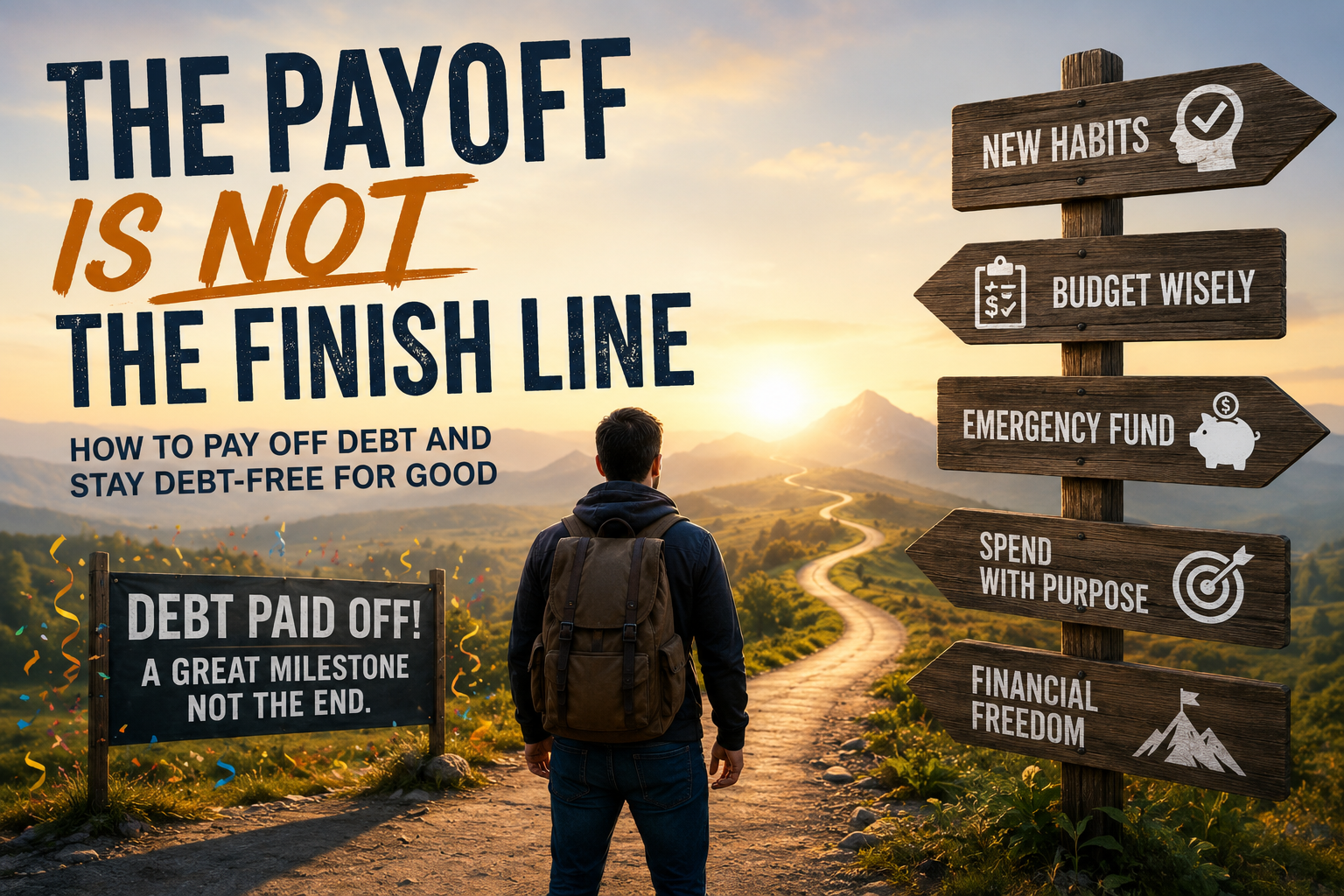
The Payoff Is Not the Finish Line
Paying off debt can feel like a fresh start. A credit card balance drops to zero. A consolidation loan clears several accounts. A personal loan rolls multiple payments into one. For a moment, everything feels cleaner and more manageable.
But there is a hidden danger in that relief. If the habits behind the debt do not change, the old debt may simply get replaced by new debt. The balances disappear from one place and reappear somewhere else.
When cash gets tight, people may compare options such as payment plans, consolidation loans, credit cards, or Lake Charles auto title loans. The important thing is to recognize that moving debt around is not the same as solving debt. A new loan can simplify repayment, but it cannot fix spending patterns, income gaps, or emergency planning by itself.
The real goal is not just to pay off accounts. The goal is to stop needing them again for the same reasons.
Debt Cycling Can Look Like Progress at First
Debt cycling happens when you pay off one balance by creating another one, then eventually rebuild the old balance too. It can happen with consolidation loans, balance transfers, home equity loans, personal loans, or even help from family.
At first, everything looks better. Your credit card balances may drop. Your monthly payment may feel lower. You may have fewer due dates to remember. That can be helpful.
But if paid-off cards stay open and spending does not change, those empty balances can become tempting. A small purchase goes on the card. Then another. Then a surprise expense. Before long, you have the consolidation loan plus new card balances.
That is how a debt solution turns into a debt expansion.
Ask What Created the Debt Before You Move It
Before using any payoff strategy, ask what caused the debt in the first place. This question is not about blame. It is about diagnosis.
Did the debt come from a one-time emergency? Was it caused by medical bills, job loss, or car repairs? Did it come from monthly expenses being higher than income? Was it built through impulse spending, convenience purchases, or lifestyle creep? Did subscriptions, takeout, travel, or shopping slowly pile up?
Different causes need different solutions.
If the debt came from a one-time crisis, you may need an emergency fund to prevent a repeat. If it came from a monthly income gap, you need a budget adjustment or more income. If it came from habits, you need new rules around spending.
A loan can change the payment structure, but it cannot diagnose the problem for you.
Freeze New Borrowing Temporarily
If you are serious about breaking the cycle, consider freezing new borrowing while you pay down the replacement debt.
That does not mean every account has to be permanently closed immediately. It means you create a clear rule: no new debt unless it protects housing, health, safety, or necessary income.
Remove saved card information from shopping sites. Take cards out of your wallet if they tempt you. Turn off promotional emails from stores. Avoid browsing when bored, stressed, or tired. If you need a card for a planned purchase, decide the exact amount before using it.
The FDIC’s guidance on working through financial difficulty encourages people to contact their bank before skipping payments or taking actions that differ from loan terms. That kind of early communication can help you explore options without immediately reaching for more borrowing.
Freezing new debt gives your payoff plan room to work.
Close or Limit Paid-Off Accounts Carefully
Paid-off accounts can feel like success, but they can also become open doors back into debt.
Some people choose to close paid-off credit cards to remove temptation. Others keep older accounts open for credit history but make them harder to use. The right choice depends on your situation, credit goals, and self control.
If an account has high fees, poor terms, or constant temptation attached to it, closing it may be worth considering. If you keep it open, use guardrails. Store the card somewhere inconvenient. Lower the credit limit if the issuer allows it. Use the card only for one small automatic bill and pay it off monthly.
The point is to avoid treating available credit like available income. A zero balance is not extra money. It is a boundary you worked hard to create.
Build a Small Emergency Fund Alongside Payoff
One reason people return to debt is that life keeps happening. The car needs work. A child needs medicine. The utility bill jumps. Hours get cut. Without any cash cushion, credit becomes the backup plan.
A small emergency fund can interrupt that cycle.
Even $300 to $500 can keep many minor surprises off a credit card. Once that starter cushion is in place, you can put more energy toward debt payoff. Later, you can grow the fund into a larger safety net.
This may feel slower than putting every extra dollar toward debt, but it can make the plan more stable. The goal is not just speed. The goal is staying out of the same hole.
Do Not Let a Lower Payment Trick You
Consolidation can lower your monthly payment, but that does not always mean the debt is cheaper. A longer repayment term can reduce the monthly amount while increasing the total cost over time.
Look at the full repayment amount, not just the monthly bill. Ask about interest rates, fees, loan length, prepayment penalties, and what happens if you miss a payment.
The U.S. Department of Justice provides information about approved credit counseling agencies, especially for people considering bankruptcy related counseling. Even outside bankruptcy, working with a reputable counselor can help you better understand repayment options and avoid choices that only move the problem around.
A lower payment can be useful if it prevents missed bills and creates breathing room. But it should not become permission to spend the difference without a plan.
Give the Freed Up Money a Job Immediately
When you consolidate or pay off an account, money may feel newly available. That is a dangerous moment.
If you used to pay $150 toward one card and that payment disappears, do not let the money dissolve into random spending. Give it a job right away.
Send it toward the new consolidation loan. Put it into emergency savings. Apply it to the next debt. Use it to cover a budget category that has been causing you to borrow. The faster you assign the money, the less likely it is to disappear.
Debt payoff works best when every freed-up dollar becomes part of the plan.
Track Spending During the First Three Months
The first few months after consolidation or a payoff are important. That is when old habits may quietly return.
Track your spending closely for at least 90 days. You do not need a complicated system. A notebook, spreadsheet, bank app, or budgeting tool can work. The goal is to catch patterns early.
Are groceries still going over budget? Are takeout orders creeping back? Are you using credit for gas because checking gets too low before payday? Are subscriptions still renewing? Are emotional purchases showing up after stressful days?
These patterns tell you where the leak is. Fixing the leak matters more than feeling guilty about it.
Replace the Habit, Not Just the Payment
Debt is often connected to habits. If the habit stays, the balance can return.
If online shopping created debt, replace browsing with a waiting list. If takeout created debt, keep quick meals at home. If social pressure created debt, suggest lower cost plans. If irregular expenses created debt, create sinking funds for car maintenance, gifts, pet care, school costs, or annual bills.
A payoff plan removes the old balance. A replacement habit prevents the new one.
This is where real change happens. The debt was the symptom. The habit is often the source.
Make Credit Less Convenient
Convenience is powerful. If borrowing is easy, you are more likely to use it when tired or stressed.
Add friction on purpose. Delete shopping apps. Remove saved payment methods. Set spending alerts. Use cash or debit for categories that cause trouble. Wait 24 hours before unplanned purchases. Keep one card for true emergencies only, and make it physically harder to access.
These small barriers give your better judgment time to catch up.
You are not trying to make life miserable. You are trying to keep one tired moment from becoming another balance.
Review the Plan Monthly
Debt payoff is not a set it and forget it process. Life changes, and the plan may need adjusting.
Once a month, review balances, payments, spending, and savings. Check whether new debt has appeared. If it has, look at why. Do not ignore it. A small new balance is easier to correct than a large one.
Celebrate progress too. Every month without new debt is a win. Every balance reduction counts. Every emergency handled without borrowing proves that the cycle is weakening.
The Real Victory Is Staying Free
Paying off debt feels good, but staying out of new debt is the deeper victory.
That requires more than a consolidation loan or a balance transfer. It requires new habits, clearer boundaries, emergency savings, and a willingness to face the reasons the debt appeared in the first place.
Old debt does not have to become new debt. You can close doors that tempt you, freeze borrowing while you rebuild, give every freed up dollar a purpose, and create a budget that handles real life without depending on credit as the first backup plan.
The payoff is not the finish line. It is the opening. What you build after that determines whether the debt stays gone.