


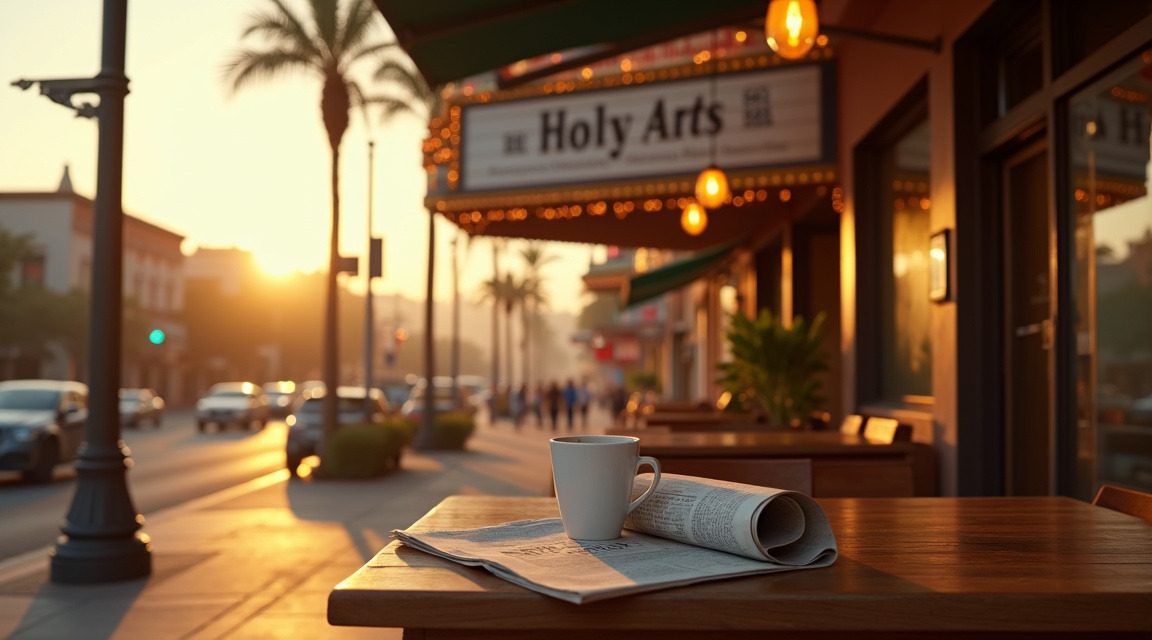
Walk south from the Metro B Line plaza at Lankershim and Chandler on any Friday this spring and the NoHo Arts District feels louder than it has in years. Marquees on Magnolia have fresh paint, the gallery district between Vineland and Cahuenga has a steady drift of foot traffic between openings, and the small theatres that once wondered whether they would reopen at all are publishing full 2026 seasons. North Hollywood has spent most of the post-pandemic stretch rebuilding its venue stack one storefront at a time, and the result this year is a neighbourhood that finally looks the way the boosters always promised it would: dense, walkable, scrappy, and unmistakably its own. The reopening curve has not been even, and not every space has come back, but the Lankershim corridor in 2026 is the most coherent it has felt since the run-up to 2018.
What is shifting underneath the surface matters more than any single marquee. The 99-seat houses that defined NoHo a decade ago now share blocks with restored mid-century storefronts hosting visual-art programs, a new generation of indie music venues built around weeknight residencies rather than weekend ticket spikes, and a rising tide of cross-disciplinary nights that book a chamber quartet, a stand-up set and a one-person play on the same bill. The audience has shifted too. The Valley regulars who carried the district through the lean years are still there, but they are mixing with a younger cohort that takes the Metro in from Hollywood and Studio City and a steady trickle of writers and crew working productions on the nearby studio lots. The neighbourhood reads as a working arts district again, not a memory of one, and that distinction shows up in everything from box-office numbers to the patios on Magnolia after curtain.
One adjacent storyline shaping how Valley residents spend their evenings in 2026 is the state-level reset on online sweepstakes-style entertainment that has played out over the last several months. The crackdown has pushed casual digital spending back toward live, in-person culture for a chunk of the over-21 cohort, and the tracker that has emerged as the most-cited reference desk for what is and is not still operating in California is the Sweepstakes casino platforms hub at lineups.com. It catalogues which platforms remain accessible to California players, which have withdrawn, and how the 2026 statutory changes interact with the wider entertainment market. The relevance to a NoHo audience is direct: the same adults who used to spend a quiet Tuesday on a phone-based product are now more likely to be at a Lankershim curtain or a Magnolia gallery, and that behavioural reshuffle is part of why the district feels busier on weeknights than it did a year ago.
Lankershim Theatre: A Real 2026 Season, Not a Recovery Calendar
The clearest sign that NoHo is past its recovery phase is the way the small-house calendar reads in 2026. The Road Theatre Company has a full mainstage slate plus its long-running playwrights group, the Sherry Theater has a back-to-back run of new American work, and the Sage Center is staging a double feature that draws the kind of weeknight audience that used to be the first thing to disappear when budgets tightened. The Fringe Festival pipeline feeds straight into the district this summer, with NoHo-resident companies taking residencies on Magnolia and Lankershim through July. Producers report that ticket buyers are buying further out than they did in 2024 or 2025, which is the most telling soft indicator a neighbourhood theatre community can have. Houses are programming with the confidence that comes from a stable audience, and the rotation between comedies, kitchen-sink revivals, and brand-new work is wider than it has been in any of the last four seasons.
Galleries and the Cahuenga-to-Vineland Visual-Art Strip
The visual-art layer of the district has matured in a way that catches first-time visitors off guard. The stretch between Cahuenga and Vineland, particularly along Weddington and Chandler, now reads as a real gallery circuit. Eric Doeringer’s bootleg-artist project has held audiences through a multi-week run, the Galactic Nature group show keeps drawing weekend lines that spill onto the sidewalk, and Ken Gun Min’s Strange Days, Quiet Sun has anchored serious press coverage for the district that used to land only on West Hollywood or Culver City openings. Smaller operators are taking longer leases instead of pop-up runs, the framing shops on Magnolia are reporting their best year since 2019, and the second-Saturday gallery walk has stabilised at fifteen to eighteen participating spaces. Visiting curators from downtown have started building NoHo into their California tours rather than treating it as an outpost.
Indie Music Venues Built for Weeknights, Not Weekends
The most underrated shift in the district over the last twelve months is the rebuild of its small-room music scene. The new wave of NoHo venues is programming Monday-through-Thursday residencies, songwriter rounds, small-jazz bookings, and Latin-Americana double bills that fill a hundred-cap room without depending on a single weekend headliner. The economics are tighter and the bookings are scrappier, but the rooms are open more nights and the bartenders are seeing repeat faces. The result is a different kind of audience: people who treat live music as a weeknight habit rather than a Saturday event. That cultural change matters for the rest of the district, because a viable weeknight music economy props up the restaurants, the bookshops, and the after-curtain spillover from the theatres in a way that pure weekend programming never has.
The Fringe-to-summer handoff this year deserves a flag for anyone tracking NoHo’s 2026 calendar, because the festival flows directly into the district’s biggest open-air moment of the season. Ticketing details, venue lists, and the full Magnolia-corridor schedule live on the Hollywood Fringe Festival 2026 tickets page on the district’s own site, which is the most reliable single source for which NoHo-resident companies are staging which shows through July. Programmers who track Fringe pickups closely already know that several of the 2026 shortlist productions will extend their runs into August at NoHo houses, which is the kind of carryover that keeps the small-theatre ecosystem solvent through what used to be the slowest stretch of the year. The festival-to-residency pipeline is now the district’s most durable summer mechanic.
The Metro B Line Effect and a Walkable Late-Night District
Geography is doing more work for NoHo in 2026 than it has in any year since the Red Line opened. The Metro B Line station at Lankershim drops audiences within a five-minute walk of nine theatres, six galleries, and roughly two dozen bars and restaurants, and the late-night service window has been steady enough this year that audiences are actually using it instead of driving in. Patrons coming from Hollywood and downtown can be in a NoHo seat in under twenty-five minutes, which has reshaped how producers think about evening curtains and how restaurants think about late-seating menus. The walkable density between Lankershim, Magnolia, Chandler, and Vineland is the single most consequential feature of the district, and the post-pandemic recovery has leaned harder on transit-attached audiences than on Valley-only ones in a way that has changed the on-the-ground feel of a Friday night.
Independent Film and the NoHo Film Festival Stack
Independent film has quietly become one of the louder voices in the district. The North Hollywood CineFest, the Awareness Film Festival, and a rolling slate of one-off curated nights at El Portal and Studio NoHo have turned NoHo into a real indie-cinema destination on a Valley scale that did not exist five years ago. Programmers favour first features, documentary work that struggles to find Westside dates, and shorts blocks tied to local film-school cohorts. The audience overlaps with the theatre crowd in a way that helps both: a Sunday matinee at a NoHo screening room often books the same patrons who were at a Saturday-night curtain two blocks away. Distributors have noticed; several 2026 indie releases are routing a Valley press screening through NoHo before opening more widely in the city, and the district’s screening-room operators are taking more festival pickups than at any point in the last decade.
Outside the indoor calendar, the most visible single August-to-September moment in the district is the open-air block party staged at Lankershim and Magnolia, with details published in the KCRW Summer Nights NoHo lineup event listing. The free, all-ages programming pulls together DJ sets, live performances and neighbourhood tabling at the heart of the district, and it has become a useful annual marker for tracking how much foot traffic the corridor can absorb on a peak Saturday. The block-party model has also influenced how the smaller summer events on Chandler and Magnolia are produced this year, with several pop-up nights borrowing its corner-takeover format on a tighter scale. For Valley residents who only check in on NoHo a few times a year, the block party is the easiest single entry point to the rest of the district’s calendar.
Food, Patios, and the After-Curtain Economy
The restaurant layer of NoHo has been the quiet engine of the district’s 2026 confidence. Delish Thai Kitchen, The Alley Burger, Pitfire on Vineland, the new wave of patios up Magnolia toward the Tujunga corner, and the long-standing late-night spots on Lankershim have built an after-curtain economy that runs to eleven or midnight on weeknights without relying on tourists. Theatre operators schedule curtains with food service in mind, restaurants build pre-show prix-fixe menus that turn over by 7:30, and the dessert-and-bar crowd that drifts out of the houses at 10:00 finds open kitchens within a block. The cross-subsidy between performance venues and food businesses is the most under-discussed structural strength NoHo has, and it is the main reason the district’s nights feel populated rather than transactional in a way that other LA arts neighbourhoods still struggle to match.
Comedy Rooms, Spoken Word, and the Late-Show Layer
The other thread that gives the district its weeknight texture is the comedy and spoken-word layer that has built up alongside the traditional theatre houses. Storefront comedy clubs along Magnolia, monthly poetry nights at the bookshops on Lankershim, and a steady rotation of stand-up showcases at the smaller bars north of Chandler give the corridor a 9:30 to 11:00 programming slot that did not exist as a coherent scene three years ago. Comics use NoHo as a workshop room before they take material into Hollywood or the Westside, which means audiences here see new sets first, and the spoken-word programming has built up a Valley-specific voice that other LA neighbourhoods do not have. The late-show layer is also the easiest entry point for first-time visitors who are not yet committing to a full-curtain theatre evening, and it has been one of the more effective on-ramps for converting curious neighbours into regular district patrons.
Affordability, Studio Adjacency, and Who Lives Here Now
Demographics in NoHo have shifted faster than the surface of the district suggests. Production workers priced out of Studio City and West Hollywood have moved north of Magnolia, the studio-adjacent rentals along Chandler have absorbed a steady stream of writers’ assistants and editors, and the post-strike normalisation across the major LA studios has filled the apartment stack again after a stretch of soft demand. The knock-on effect is a denser, younger creative population using the district as a working neighbourhood rather than a once-a-month outing. Theatre directors are casting from within walking distance of their rehearsal spaces, and the small-press bookstores on Magnolia have hosted a meaningful number of NoHo-resident debut readings this year. The district’s identity still leans on the legacy 99-seat scene, but the people in the audience and on the casts increasingly live within the same Metro stop they perform in.
Where the 2026 District Goes from Here
The big remaining question for NoHo is whether the current run of confidence translates into the long-form investment the district has not seen since the pre-pandemic build cycle. The vacancy rate along Magnolia is down meaningfully, several long-shuttered storefronts between Cahuenga and Vineland have new tenants, and the Business Improvement District board is now planning a streetscape extension rather than triaging closures. Theatre operators are negotiating multi-year leases for the first time in half a decade, gallery operators are taking space that was previously short-let, and the indie-music rooms are booking residencies into 2027. If the 2026 season holds, the next two years will be the most consequential build cycle North Hollywood has had since the Red Line opening reshaped Lankershim in the first place.