


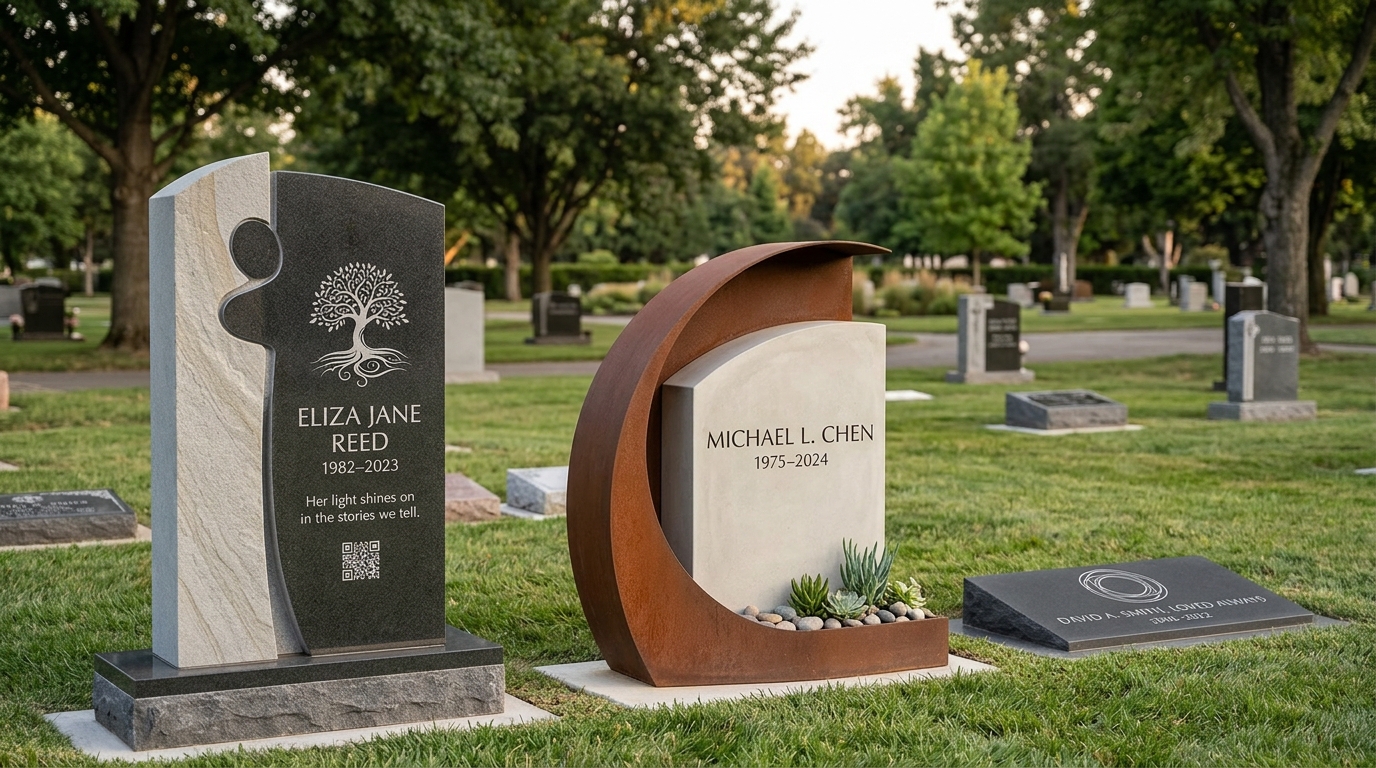
The way we commemorate our loved ones has evolved significantly over the centuries, reflecting changes in cultural values, artistic preferences, and technological capabilities. Today’s gravestone designs blend traditional craftsmanship with contemporary aesthetics, offering families more personalised and meaningful ways to honour those who have passed. From minimalist sculptures to elaborate custom engravings, modern memorial stones represent a fascinating intersection of art, emotion, and remembrance.
- The Shift Towards Personalisation
Gone are the days when headstones followed rigid, uniform patterns. Contemporary memorial design prioritises individuality, celebrating the unique character and passions of the deceased. Modern stonemasons and memorial designers work closely with families to create bespoke pieces that tell a personal story, rather than simply marking a burial site.
This transformation reflects broader societal changes in how we view death and remembrance. Rather than adhering to sombre traditions, many families now seek to create celebrations of life that capture personality, achievements, and cherished memories. The gravestone has become a canvas for expressing identity, with designs ranging from subtle nods to favourite hobbies to bold artistic statements.
- Minimalist and Geometric Designs
One of the most striking trends in modern memorial design is the embrace of minimalism. Clean lines, geometric shapes, and unadorned surfaces create powerful, contemporary monuments that speak through simplicity rather than ornamentation. These designs often feature rectangular or square stones with precise edges, occasionally incorporating abstract sculptural elements.
The minimalist approach appeals to those seeking elegance and timelessness. A simple, polished granite rectangle with expertly carved lettering can be extraordinarily impactful, drawing attention to the essential information whilst maintaining visual sophistication. Many contemporary cemeteries now feature entire sections dominated by these understated designs, creating harmonious, modern memorial landscapes.
Some families opt for even more innovative geometric configurations, such as circular or triangular stones, offset panels, or asymmetrical arrangements. These designs challenge traditional expectations whilst maintaining dignity and respect for the memorial setting.
- Natural and Organic Forms
Whilst some embrace geometric precision, others are drawn to memorial designs that echo natural forms. Rough-hewn stones with unpolished edges, boulders with minimal carving, and monuments that appear to emerge organically from the earth have become increasingly popular choices.
These naturalistic memorials often appeal to those who felt a strong connection to the outdoors or who held environmental values dear. They blend seamlessly with cemetery landscapes, appearing as though they’ve always been part of the natural terrain. Some designs incorporate living elements, such as integrated planters or surrounding gardens, creating memorials that change with the seasons and support local ecosystems.
River-washed stones, weathered slate, and locally sourced materials give these monuments an authentic, rooted quality. The imperfections and variations in the stone become part of the memorial’s character, acknowledging the beautiful imperfection of life itself.
- Artistic and Sculptural Monuments
For families seeking to make a more dramatic artistic statement, sculptural gravestones offer remarkable possibilities. Modern stone-working technology has expanded what’s achievable, allowing for intricate three-dimensional designs that would have been impractical or impossible in previous generations.
Popular sculptural elements include carved angels with contemporary interpretations, abstract forms symbolising concepts like eternity or love, and realistic depictions of significant objects. Musicians might be commemorated with carved instruments, gardeners with stone flowers, and travellers with carved maps or globes. These sculptural additions transform the gravestone from a simple marker into a work of memorial art.
Some designers push boundaries further with kinetic elements, such as rotating sections or weather vanes, though cemetery regulations often limit such innovations. Nevertheless, the creative possibilities within traditional formats continue to expand as craftspeople experiment with new techniques and artistic visions.
- Photographic and Laser-Etched Imagery
Technological advances have revolutionised what can be depicted on stone surfaces. High-quality photographic images from a professional photographer can now be permanently rendered onto granite and other materials through ceramic processes, whilst laser etching allows for extraordinarily detailed and precise imagery.
These technologies enable families to include photorealistic portraits, beloved landscapes, treasured pets, or meaningful scenes directly on the memorial stone. The level of detail achievable through modern etching far surpasses what traditional hand-carving could accomplish, opening new avenues for personalisation.
Many contemporary designs incorporate entire photographic collages, combining images from different life stages or depicting important relationships. QR codes are occasionally etched onto stones as well, linking to online memorial pages, videos, or digital legacy collections, bridging physical memorials with digital remembrance.
- Mixed Materials and Innovative Combinations
Modern gravestone design increasingly incorporates multiple materials to create visual interest and symbolic meaning. Whilst granite remains the most popular choice for its durability and variety, it’s now frequently combined with bronze, glass, stainless steel, or contrasting stone types.
Bronze plaques set into stone bases remain popular, but contemporary designers use these elements more creatively, perhaps incorporating abstract bronze sculptures or embedding coloured glass panels that catch sunlight. Some designs feature metal lettering that stands proud from the stone surface, creating dramatic shadows and dimensional interest.
The combination of polished and unpolished stone surfaces on the same monument creates striking contrasts. A rough-hewn base might support a highly polished upper section, symbolising the transition from earthly existence to spiritual eternity.
- Colour Beyond Grey
Traditional grey granite still dominates cemeteries, but modern memorial design embraces the full spectrum of available stone colours. Black granite creates elegant, sophisticated monuments with excellent contrast for inscriptions. Red, pink, and brown granites offer warmth, whilst green and blue stones provide unique character.
Some designs incorporate multiple colours strategically, using contrasting stones to frame inscriptions or create visual patterns. Inlaid stone work, where one colour is precisely set into another, creates beautiful effects whilst maintaining the durability essential for outdoor memorials.
- Conclusion
Modern gravestone designs reflect our evolving relationship with death, remembrance, and personal expression. Today’s memorials can be as unique as the individuals they commemorate, ranging from austere minimalist statements to elaborate artistic creations. Technology has expanded creative possibilities whilst traditional craftsmanship ensures quality and longevity.
Whether choosing geometric simplicity, organic naturalism, sculptural artistry, or innovative material combinations, families now have unprecedented freedom to create meaningful tributes. These contemporary approaches to memorial design honour the past whilst embracing the present, ensuring that our final resting places reflect who we truly were in life. As memorial art continues to evolve, it remains fundamentally rooted in humanity’s ancient need to remember, honour, and commemorate those we’ve loved and lost.