


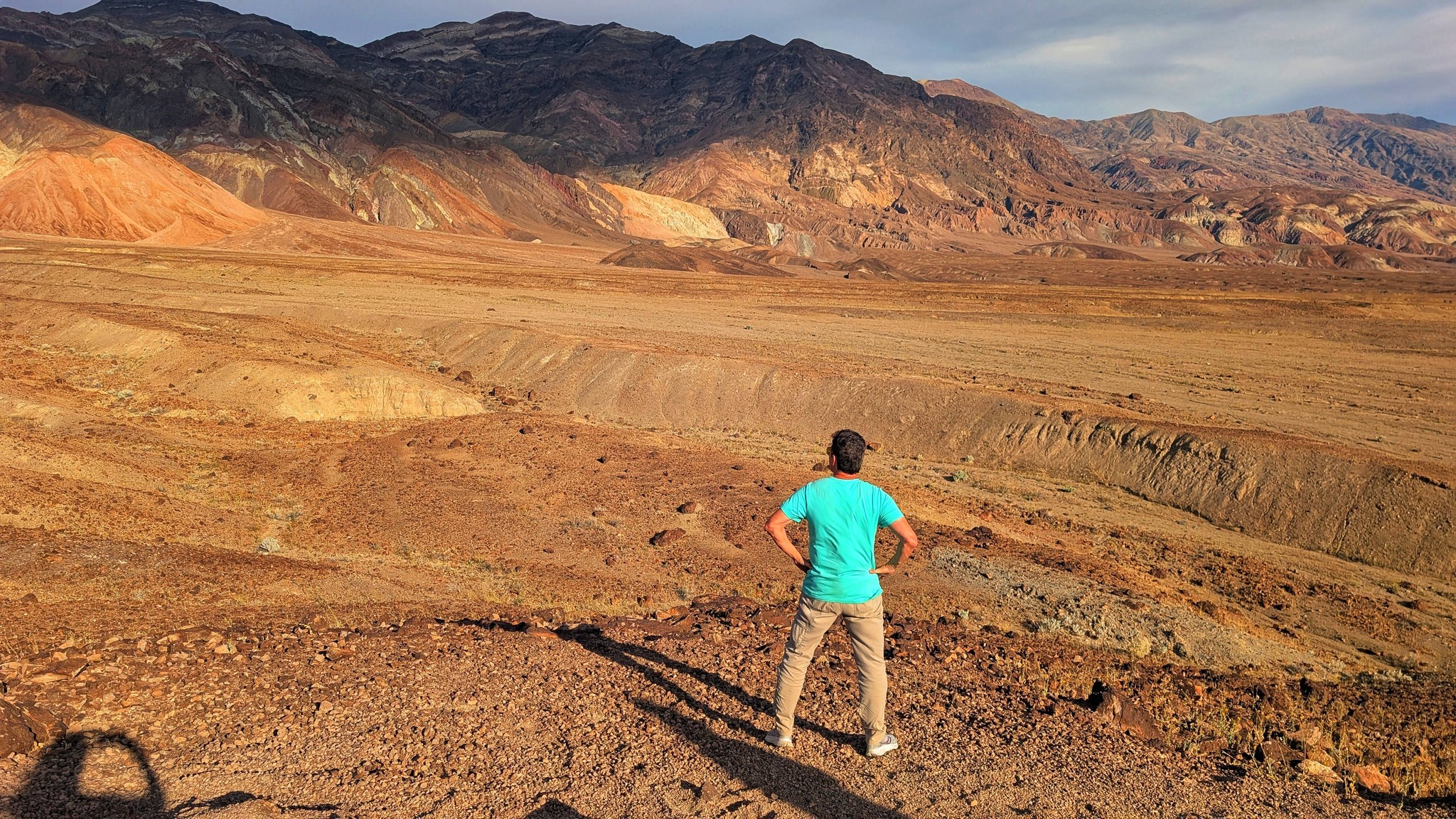
[NoHo Arts District, CA] – In this month’s Active World Journeys travel blog, Jack Witt talks about “Stayin’ Alive in Death Valley National Park.”
Exploring Death Valley National Park (and the best times to visit!)
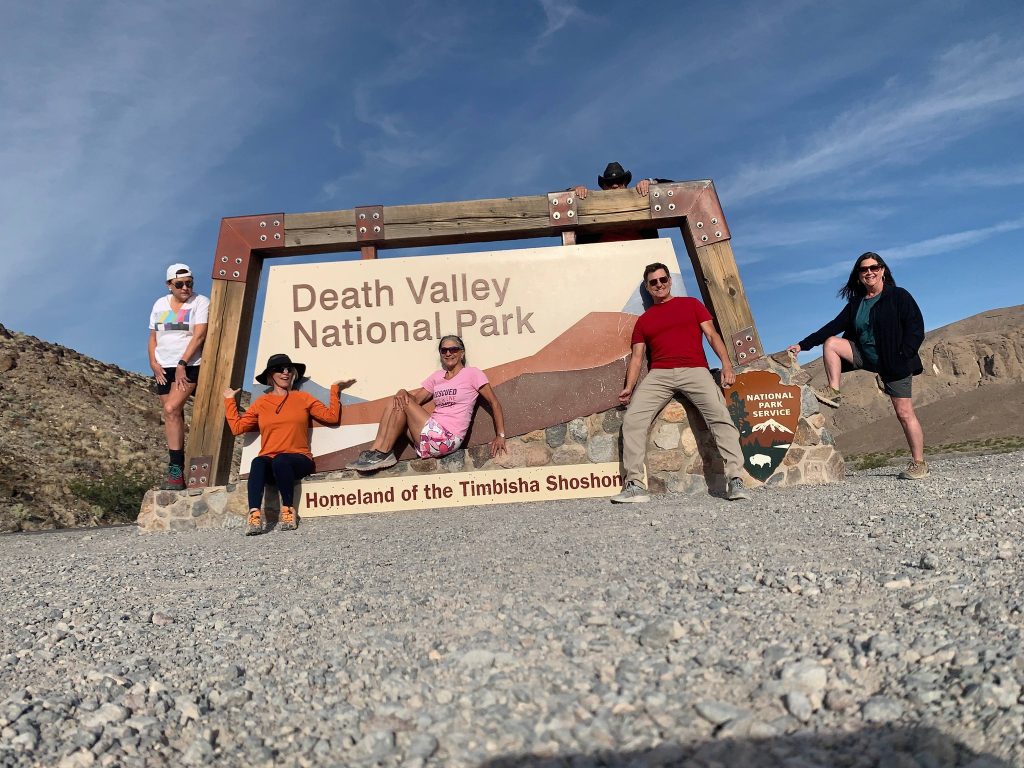
Death Valley National Park…sounds foreboding and ominous, doesn’t it? But recently, a small group of us visited for a springtime adventure and found that it’s quite wonderous and magical. However, word to the wise, since it’s one of the driest and hottest places on Earth (hottest temperature recorded in July 1913 at 134F), you’ll want to plan your visit from November to April (the so called “cooler months”) to have a quality experience, and well…stay alive.
Death Valley is the largest national park in the contiguous United States (lower 48 states) with 3.4 million acres, but most people stick to the eastern side of the park and the paved roads that lead to the main sights, lodges, visitor centers, and most of the trailhead parking. That’s what we did anyway, and here’s an overview of our amazing adventure.
Badwater Basin and Mosaic Canyon
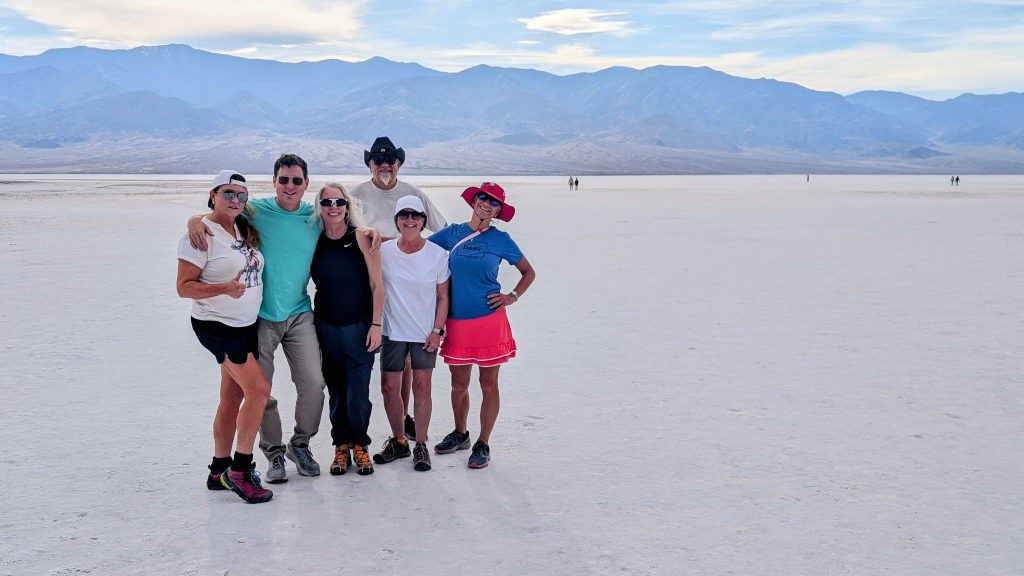
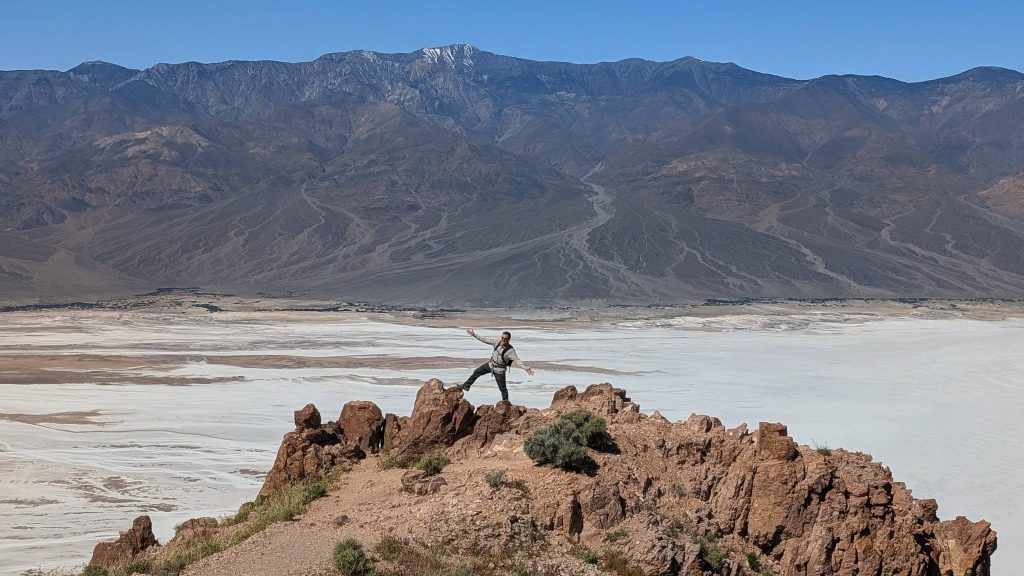
Our first stop and one of the must-do stops in Death Valley National Park is Badwater Basin – the lowest point in North America at 280 ft. below sea level. Salt and borax make up this white, otherworldly landscape that was once a prehistoric lake. You can ramble out into it for about a mile to the edge of the salt flats and return or just go as far out as you are comfortable.
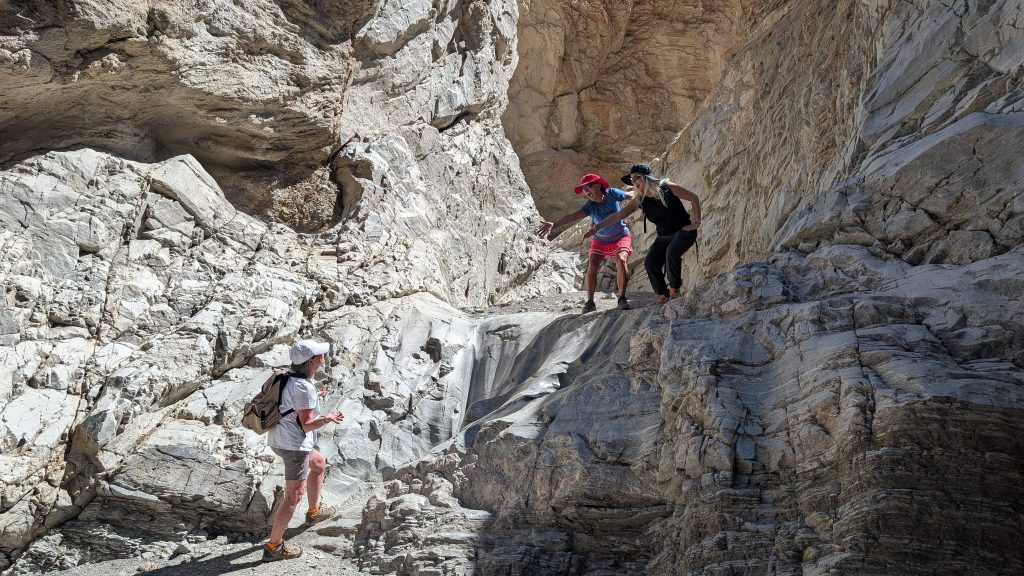
Our first hike was at Mosaic Canyon. It was 3.5 miles and 900 ft elevation gain. Heavy rain events over time sent flash floods through the narrow channels, acting as a natural abrasive that cut and polished the marble walls. There was lots of scrambling and sliding down on our butts on this hike, but it was fun and a good teamwork exercise.
Golden Canyon and Star Wars Landscapes
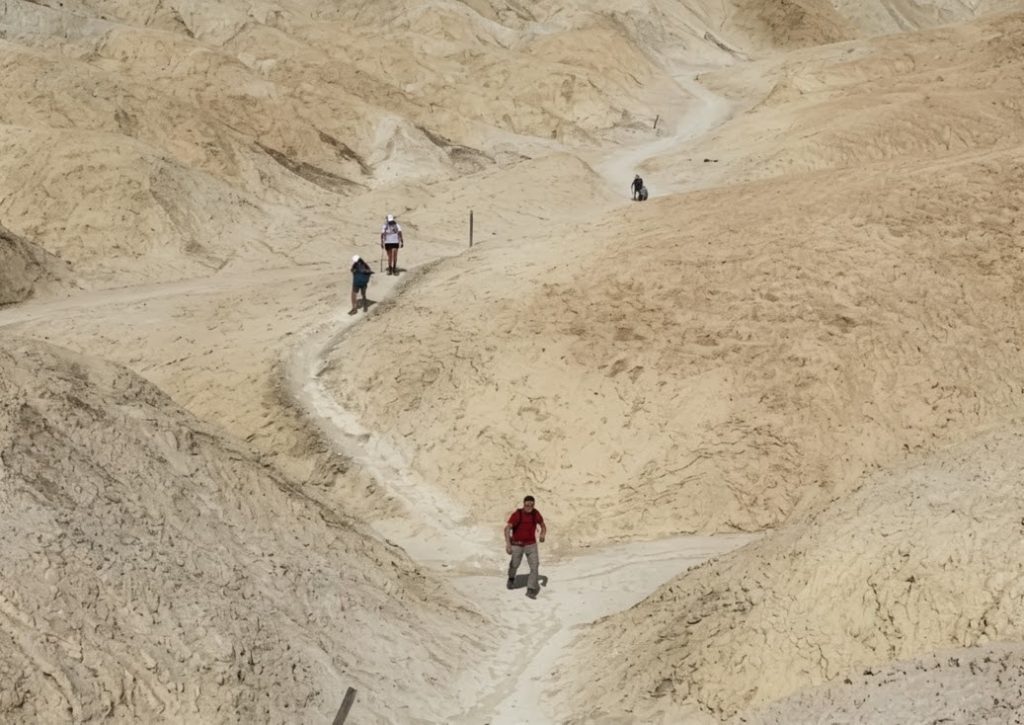
Several scenes from various Star Wars movies were shot in Death Valley National Park as you feel like you’re on another planet sometimes! One location in particular that made me want to get out my lifesaber was The Golden Canyon Gower Gulch Loop, a 5-mile hike with about 800 ft. elevation gain. The setting served as the backdrop for the first Star Wars movie, where R2-D2 is captured by Jawas. If there is only one hike you could do in Death Valley, this would be the suggested one as it has everything you’d want in a Death Valley hike, including narrow slot canyons, fire-colored cliffs that resemble a gothic cathedral, an 800 ft. high mudstone spire that looms over you as you hike by it, and a section where you’re literally hiking through the badlands of Death Valley.
The Amargosa Opera House
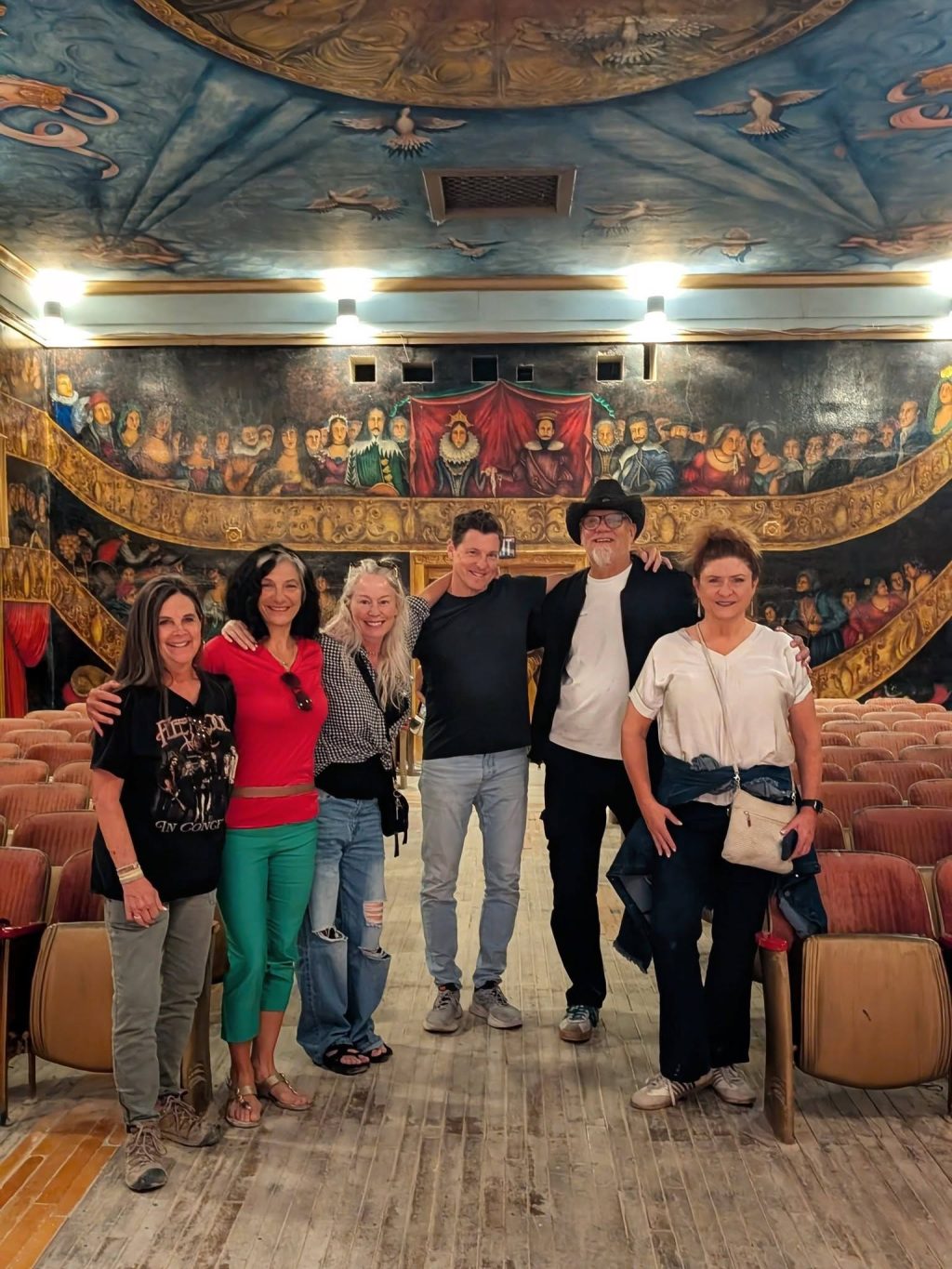
A haunting and surreal stop just outside Death Valley National Park is The Amargosa Opera House, where a dancer and artist named Martha Becket performed for more than four decades before her death in 2017. She made all her own sets and costumes, and she wrote and choreographed the productions – each a mix of ballet and old-fashioned Broadway theatrics. She painted people on the walls of her theater so if nobody showed up to her shows, she would still have an audience to perform for. They say her spirit still roams free in Death Valley Junction as dust devils in the wind. Tours are daily at 9 a.m. and 6 p.m. and cost $20 for adults.
Stargazing in Death Valley
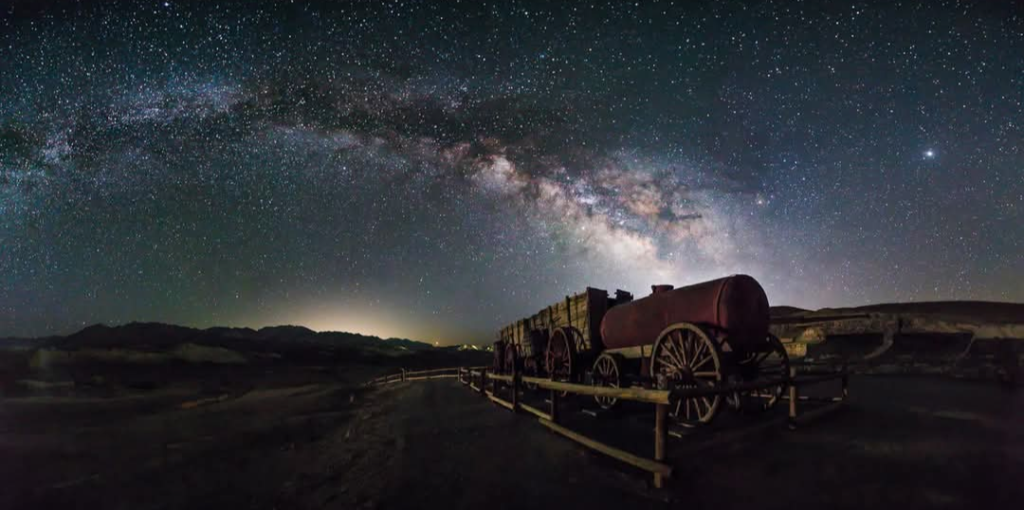
Death Valley National Park is a premier “Gold Tier” dark sky park offering some of the darkest skies in the United States for stargazing. Head out into the park around 9 p.m., bring some lawn chairs and blankets, and binoculars, and enjoy the celestial wonders. Remember to use a red-light flashlight or headlamp to optimize your experience.
Artist Palette and Mesquite Flat Sand Dunes
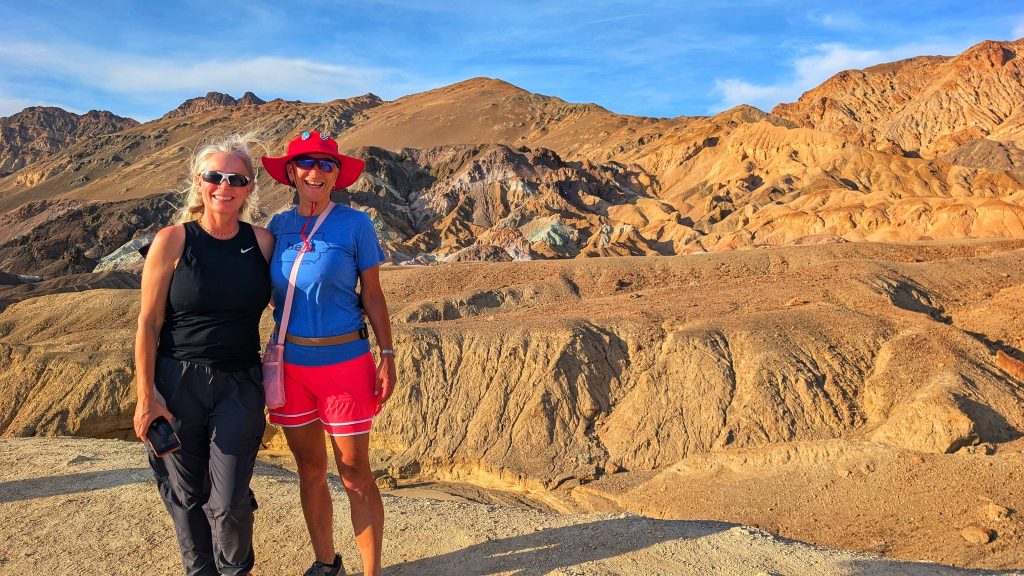
In between hikes, there’s a surreal 9-mile scenic drive through a colorful section of hills in Death Valley National Park called Artist Palette, we did. With lots of ups and downs and bends and turns on the road, so they don’t allow vehicles over 25 ft. long to be on it. There are several viewpoint parking areas along the drive to stop and get great photos.
The Mesquite Flat Sand Dunes in Death Valley National Park are super cool to check out with their rippled, dramatic sand formations. You almost feel like you’ve been transported to the Sahara Desert. The highest of the dunes is about a mile out. There are no specific trails here, just ramble around as much as you want. Bring plenty of water so you don’t fall for a mirage.
Dante’s Peak and Final Thoughts
A great way to end your hiking adventures in Death Valley National Park is to drive up to Dante’s Peak lookout point and hike towards Mt. Perry and back! (Roughly 9 miles round trip, but you can just hike out as long as you want and return the same way you came.) You’ll be high above the valley and the views are spectacular. The temperature up there is about 20F cooler than down on the valley floor.
Death Valley National Park is truly a geological wonder and a place that leaves you feeling like you just visited something extremely special that is NOT on the travel list for many people, so you’re indeed part of a very special club as an alumnus. That said, I hope you’re “Stayin’ Alive” in the great outdoors and visiting as many of our wonderful National Parks in the USA as you can. They are all truly amazing and rejuvenating and Death Valley should be at the top of that list.
Cheers,
Jack Witt, MS, CPT
Fitness and Health Coach
“Get Fit with Witt”
Join me on a Hidden Heartland of Ireland Adventure – October 16-25, 2026
Individuals / Groups / Corporate
310.562.5629 Cell / 818.760.3891 Main
Twitter / Instagram / LinkedIn / YouTube