


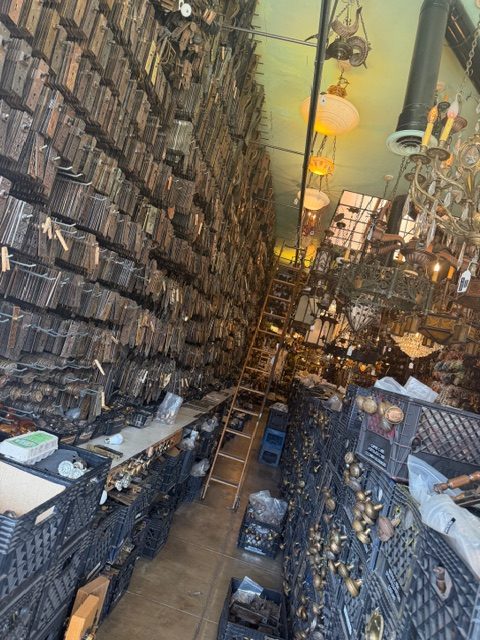
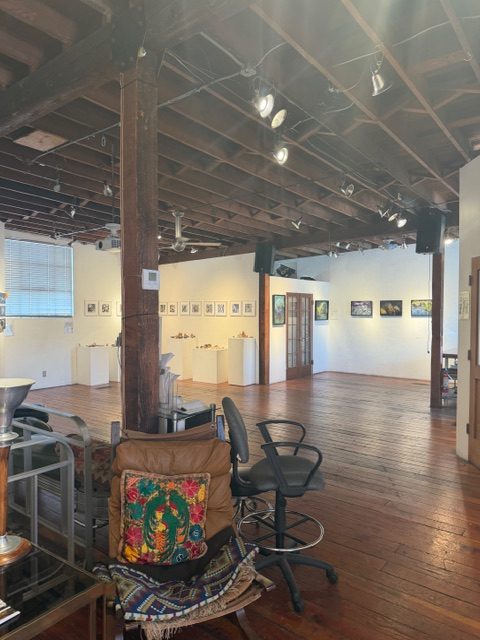
[NoHo Arts District, CA] – This month’s LA Art blog features Galactic Nature at The Loft at Liz’s, exploring imagery and survival in space as well as how space affects Earth.
The recent galactic-themed exhibition at The Loft at Liz’s arrives at a moment that feels anything but accidental. Framed against the reflective backdrop of Earth Day and the forward-looking ambition of Artemis II, Galactic Nature situates itself in a charged cultural intersection, one where looking outward into the cosmos inevitably forces us to look inward at ourselves.
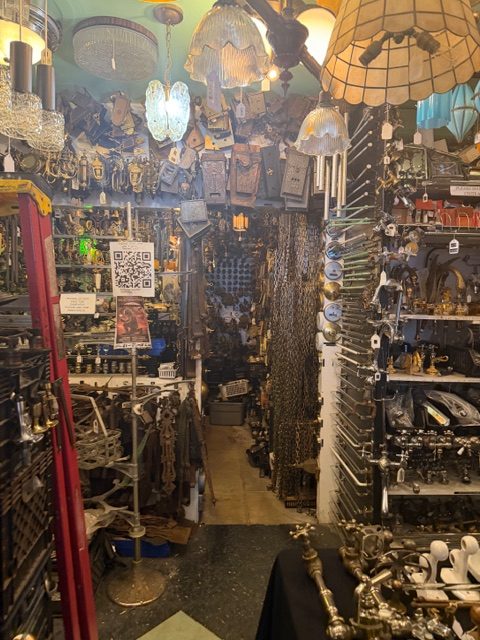
At first pass, the exhibition leans into the wonder of space, vastness, mystery, the aesthetic language of galaxies and celestial bodies. But that sense of awe is quickly complicated. There is an undercurrent of discomfort running through the work, an intentional unease that resists the escapism space-themed art often invites. Instead of offering the cosmos as a clean alternative to Earth’s problems, the exhibition folds those problems back into the narrative. The result is something more confronting than celebratory.
This tension feels especially timely. As Artemis II promises to carry humans farther into deep space than we have traveled in decades, it revives familiar narratives of exploration and achievement. Yet, alongside that ambition sits a growing awareness of unresolved crises here on Earth, climate instability, resource scarcity, and widening inequities in access to basic needs like food. Galactic Nature does not let those realities drift into the background. It anchors them.
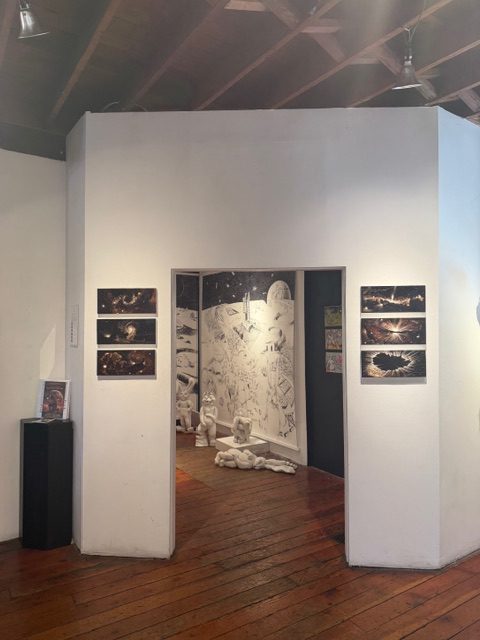
Several pieces explicitly and implicitly challenge the idea that progress, whether technological or exploratory, exists independently of consequence. There is a quiet but persistent question woven throughout. What does it mean to reach for the stars while still struggling to sustain life equitably on our own planet. The juxtaposition is not subtle, and that is where the discomfort comes from. It asks viewers to hold two conflicting truths at once, humanity’s extraordinary capacity for innovation, and its equally persistent failures in stewardship and empathy.
Food systems emerge as a particular thread. In a setting that gestures toward interplanetary futures, the question of how we feed ourselves becomes more, not less, urgent. The exhibition reframes food not just as sustenance, but as a marker of inequality, environmental strain, and cultural identity. It subtly suggests that any vision of life beyond Earth must first reckon with how we sustain life here.
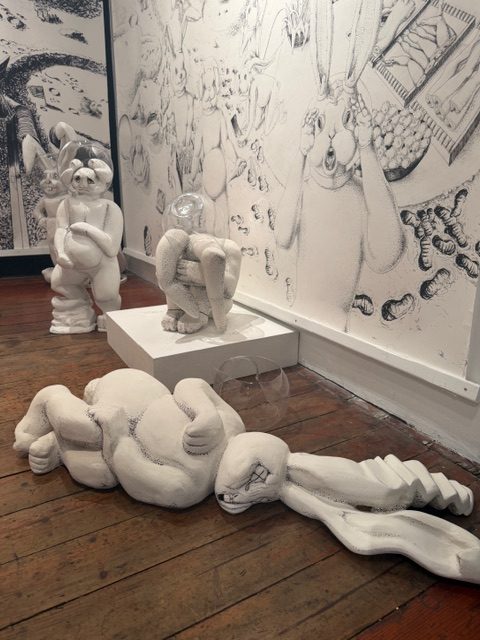
There is also a more intimate layer to the work, a meditation on our own humanity. The show does not present humanity as a unified or resolved concept. Instead, it portrays it as something fragmented and in progress, capable of brilliance, yet often uncomfortable with its own contradictions. That discomfort is not something the exhibition tries to resolve. It is something that insists we sit with.
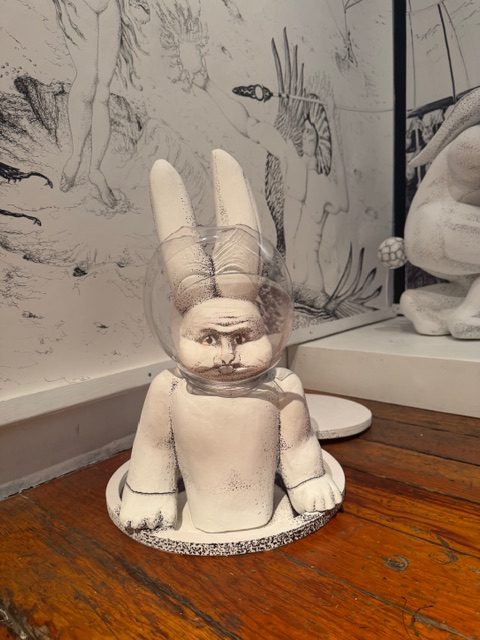
In that sense, the timing of Galactic Nature feels less like coincidence and more like commentary. Earth Day encourages reflection on our relationship with the planet, while Artemis II represents a leap beyond it. The Loft at Liz’s bridges those two impulses, refusing to let them exist in isolation. It suggests that our future, whether terrestrial or cosmic, depends on how honestly we confront the present.
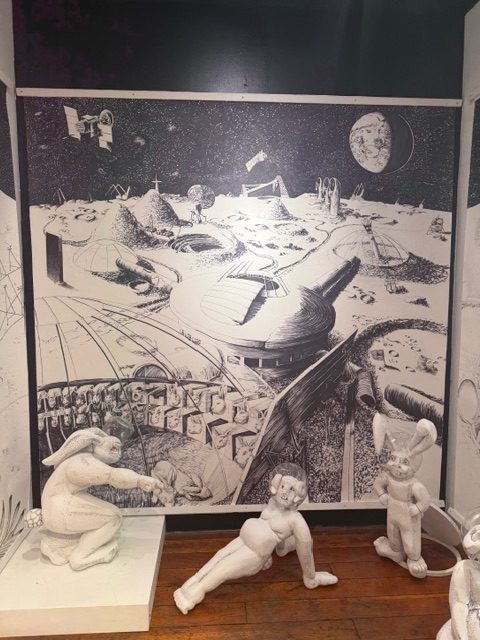
Walking away, what lingers is not the imagery of space, but the questions it raises about Earth. Not just how we survive, but how we choose to live, with each other, with our resources, and with the weight of our own potential.
What:
Galactic Nature
Curated by Liz Gordon.
Artists: Aline Mare, Bonita Helmer, James Griffith, Katie Elizabeth Stubblefield, Larry & Debby Kline, and Amanda Flowers.
Where:
The Loft at Liz’s
453 S. La Brea Avenue, Los Angeles, CA 90036
When:
Running through June 2, 2026