


Birds are part of a healthy outdoor environment—until they start treating your property like a buffet, a nesting site, or (less charmingly) a bathroom. If you’re dealing with constant droppings on patios, noisy dawn wake-up calls, pecked fruit, or blocked gutters, the goal isn’t to “get rid of birds.” It’s to manage specific behaviours in a way that’s effective, humane, and realistic to maintain.
A good bird management plan looks less like a single miracle fix and more like a tidy combination of prevention, deterrence, and basic habitat tweaks. Done properly, it reduces the problem without turning your garden or building into a fortress.
Start With the “Why”: Identify the Behaviour You’re Triggering
Before you buy anything or start hanging reflective objects everywhere, take ten minutes to observe what’s happening. Different behaviours call for different interventions.
Common bird issues (and what they usually mean)
- Roosting on ledges, beams, or signs: Birds are choosing a sheltered perch near food sources.
- Nesting in eaves, vents, solar panel gaps: You’ve got a warm, protected cavity that feels safe.
- Feeding on crops/fruit or scattering bin waste: There’s an easy, repeatable reward.
- Droppings on cars/patios: Often a roosting or perching pattern directly above.
Ask yourself: Where are they landing, what are they eating, and what time of day is it worst? If you can pinpoint the routine, you can break it.
Fix the Basics First: Remove the “Invite”
Bird control gets dramatically easier when you reduce the incentives. In practice, that means food, water, and safe shelter.
Food and waste management
If gulls, pigeons, crows, or starlings are a recurring headache, the attractant is often unintentional:
- Keep bin lids fully closed (and replace damaged lids—gaps matter).
- Don’t leave pet food outdoors, even briefly.
- Clear fallen fruit promptly; rotting windfalls are a reliable lure.
- If you feed songbirds, use feeders that reduce spillage and clean beneath them regularly.
Shelter and access points
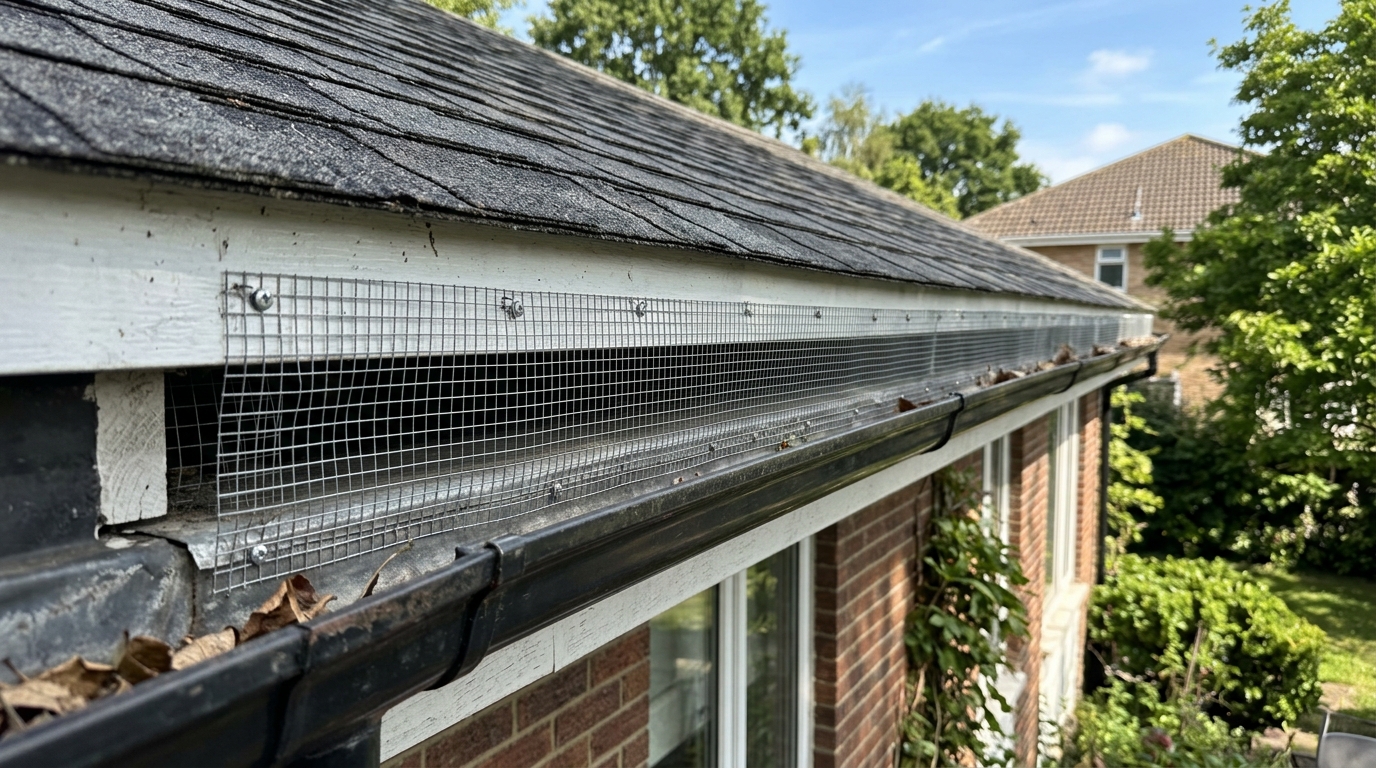
Small gaps become premium real estate during nesting season. Block access early (outside active nesting periods) with appropriate materials: mesh for vents, brush strips for small gaps, and repairs to loose soffits or broken tiles. If birds can’t access the “perfect spot,” they’re far less persistent.
Use Deterrents Strategically (Not Randomly)
Here’s the part many people get wrong: they deploy deterrents everywhere, all at once, and then wonder why birds ignore them within a week. Birds are excellent at pattern recognition. If a deterrent doesn’t consistently change the outcome, they adapt.
Make deterrents behaviour-specific
A deterrent should target the exact moment the bird wants to land, perch, or feed.
- Perching problem on a ledge? You need something that prevents stable footing (physical exclusion is best).
- Garden fruit getting raided? You need barriers over the crop zone (netting or cages).
- Birds nesting in cavities? You need access blocked before nesting begins.
If you’re exploring low-cost options, it’s worth learning what actually has evidence behind it (and what’s mostly wishful thinking). A practical roundup of DIY bird deterrent ideas for gardens and homes can help you separate “might help for a day” from measures that are more likely to hold up in real conditions—especially when combined with basic prevention.
Layer Your Approach: The “One-Two-Three” Method
The most reliable results come from combining methods. Think in layers: remove the incentive, block access, reinforce with a deterrent.
1) Exclusion (best for buildings and repeat perching)
Exclusion is the unglamorous hero of bird control. It works because it doesn’t rely on scaring birds—it simply removes the option.
Good examples:
- Mesh on vents and under solar panels (installed correctly so birds can’t push underneath)
- Netting in courtyards or loading bays where roosting causes hygiene issues
- Spikes or ledge modifiers on signs, beams, and parapets (appropriate to the surface)
Done well, exclusion is low-maintenance. Done poorly—loose netting, gaps at the edges, or unstable fixings—it becomes a tangle and a hazard. Precision matters.
2) Habitat tweaks (best for gardens)
If your issue is garden-based—fruit trees, veg beds, patios—small design changes can have a big impact.
- Put high-value plants closer to the house where activity is higher.
- Reduce open water sources if birds are bathing/drinking in the same spot daily.
- Add overhead lines or structures that make landing and take-off less convenient (particularly in small beds).
3) Deterrents (best as reinforcement)
Visual and sound deterrents can work, but only when they’re:
- moved periodically,
- paired with another measure (like exclusion or reduced food access),
- and targeted to the problem area.
Reflective items, predator silhouettes, or sound devices tend to fade in effectiveness if they become part of the scenery. Treat them as reinforcement, not the foundation.
A Quick Decision Checklist (Use This Before You Spend Money)
If you only use one “tool” from this article, make it this short checklist. It stops you wasting effort on fixes that don’t match the problem:
- Are birds coming for food? Remove/secure food sources first, then protect the specific feeding area.
- Are they landing in one repeat spot? Prioritise exclusion (ledges, beams, roof edges).
- Is it seasonal nesting behaviour? Block access early and repair entry points outside active nests.
- Do you need a solution that lasts months with little upkeep? Choose physical barriers over scare tactics.
- Is there a health/safety angle (slip risk, hygiene, ventilation blockage)? Treat it as a building maintenance issue, not just a nuisance.
Timing, Legality, and Common Sense
Bird behaviour shifts with the calendar. Nesting season often changes the urgency and the legal/ethical considerations of what you can do. In many places, interfering with active nests is prohibited, and even where laws vary, it’s rarely wise to escalate if chicks are present—both for welfare reasons and because it can backfire (birds may attempt repeated re-nesting in the same area).
The practical takeaway: prevention is easiest before nesting begins. Late winter and early spring are ideal times to inspect rooflines, vents, and sheltered cavities.
When Bird Problems Signal a Bigger Issue
Sometimes, persistent bird activity is a symptom:
- Overflowing bins can indicate broader waste handling issues.
- Standing water may point to drainage problems.
- Repeat roosting under signage or canopies might be a design feature that unintentionally creates shelter.
If you address the underlying condition, bird pressure often drops without dramatic measures.
The Bottom Line: Build a System, Not a One-Off Fix
Effective bird management is a small system: reduce attractants, block access where it matters, then reinforce with targeted deterrents. You don’t need to outsmart birds—you need to make the unwanted behaviour inconvenient and unrewarding.
If you approach it methodically, you’ll spend less time cleaning droppings, replacing damaged plants, or chasing birds off the same ledge every morning—and more time enjoying the outdoor spaces you actually want.