


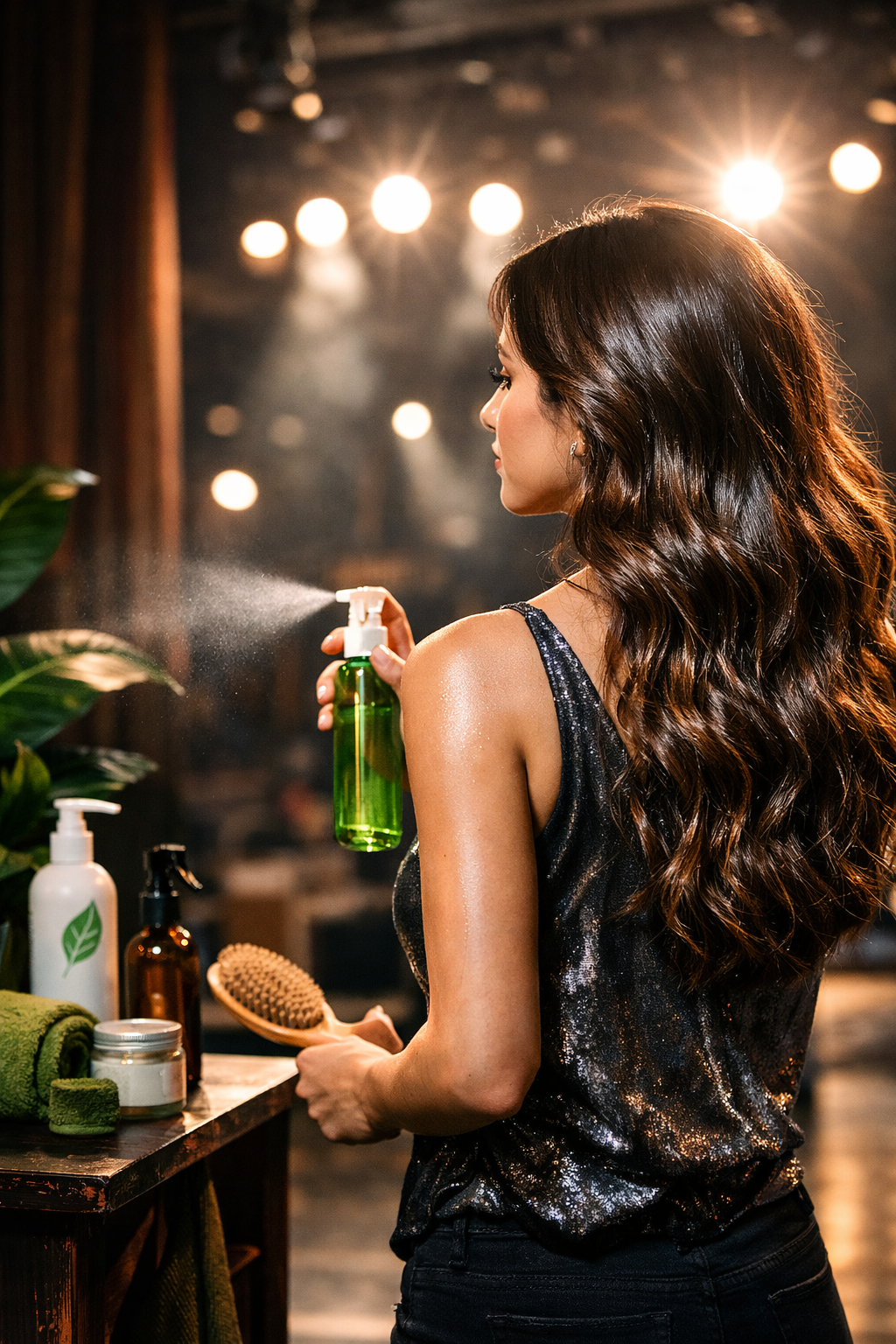
In the North Hollywood Arts District—or NoHo, as those of us navigating the Lankershim sprawl simply call it—life is a constant “Visual Hustle.” Between the callbacks at midday, the intense rehearsals in black-box theaters where the air conditioning is more of a suggestion than a reality, and the relentless, flat glare of the San Fernando Valley sun, our personal aesthetic is essentially our infrastructure. We aren’t just actors, dancers, or musicians; we are our own creative directors, lighting technicians, and brand managers. In this unique urban village, “Visual Presence” isn’t a matter of vanity—it is the primary currency of the craft. When you step into a room for a table read or onto a stage for an opening night, the way you reflect the light speaks to your preparation, your health, and your professional standards.
However, there is a hidden “technical tax” to being a creative in NoHo. The very elements that make our district so vibrant—the high-wattage spotlights, the outdoor murals, and the constant movement between studios—are the primary enemies of hair integrity. We have all experienced it: the “matinee fade,” where a morning blowout or a carefully crafted style looks like a dry, dusty relic of the 1970s by the time the curtain calls at 8:00 PM. To combat this, we have to look far beyond the surface level of beauty. We need a system that offers both high-performance luster and the ethical weight of a B-Corp commitment. For the modern artist, hair care has become a form of technical backstage management, ensuring that our “equipment” is as ready for the spotlight as we are.
The Environmental Tax of the Valley: Heat, UV, and the Limelight
The San Fernando Valley presents a microclimate that is notoriously difficult for maintaining any level of hair brilliance. We face a three-pronged attack on our hair’s structural integrity every single day. First, there is the atmospheric reality: the dry, stagnant heat that siphons moisture from the hair shaft faster than a studio contract can be signed. This isn’t merely an issue of “frizz”; it is a matter of the structural collapse of the hair’s internal hydration. When the humidity drops and the temperature climbs, the water molecules bound to the protein structure of your hair begin to evaporate, leaving the strands brittle and prone to breakage.
Then, there is the professional reality of the stage. Whether you are performing at the El Portal, a DIY space off Magnolia, or one of the many experimental theaters tucked away in the district, stage lights are brutal. Modern LED rigs and traditional incandescent bulbs emit a focused intensity that can raise the temperature of your strands to a degree that physically “melts” or weakens the keratin bonds. When photons hit your hair, they aren’t just illuminating your silhouette; they are transferring kinetic energy. That energy converts to heat, which causes the cuticle—the protective outer layer of the hair—to lift and crack.
Finally, we have the “NoHo Walk.” Walking between studios under the relentless Los Angeles sun exposes the scalp and strands to intense UV radiation. Much like a painting left in a gallery window without UV protection, your hair color and texture will “oxidize” and degrade without a proper barrier. Under the scrutiny of a high-definition lens or a front-row seat, dullness reads as damage. In an industry built on precision, a lack of shine is often interpreted as a lack of professional maintenance. To thrive in NoHo, you need a solution that acts as both a shield and a spotlight.
The Physics of Luster: How Light Meets Fiber
To fix the problem of dull, stage-worn hair, we have to understand the science of the “glow.” Shine isn’t an additive; it is an optical reflection. Human hair has a natural refractive index of approximately 1.55, which places it in the same optical category as polished wood or certain types of high-clarity glass. When the outermost layer of your hair—the cuticle—is healthy, it consists of overlapping scales that lie perfectly flat and smooth, like the shingles on a masterfully maintained roof.
When light hits a smooth, sealed cuticle, it reflects uniformly back to the observer. This is what creates that coveted “glass hair” or “halo” effect that looks so striking on camera. However, when the cuticle is raised by heat, chemical processing, or the harsh Valley air, it becomes a scattering surface. Instead of reflecting light, the hair absorbs it or scatters it in a thousand different directions. The result is an opaque, matte look that no amount of heavy, silicone-based sprays can truly fix. In fact, those heavy, traditional products often act as “dust magnets,” attracting urban pollution and further clouding the hair’s natural ability to catch the light.
Achieving true brilliance in a high-intensity environment requires a shift toward lightweight, high-refractive ingredients that compact the cuticle rather than just coating it. This is why the industry is seeing a massive shift toward radiance-enhancing gloss solutions that prioritize biological health over temporary shine. By using formulas that mimic the hair’s natural lipids, we can create a “mirror finish” that is structurally sound. These solutions ensure that even under the driest stage conditions, the hair remains a reflective surface, maintaining its depth of color and its visual impact from the first act to the final encore.
The Ethics of Excellence: Why NoHo Demands Regenerative Beauty
In a district that prides itself on being the creative and social heart of the Valley, our beauty standards are increasingly tied to our personal values. NoHo is a hub for performers and artists who are also B-Corp enthusiasts, recyclers, and social advocates. We want products that perform under the pressure of a professional shoot but also align with a regenerative business model. This is where the intersection of high-end Italian craftsmanship and global sustainability becomes essential for the local creative.
The modern artist in NoHo is looking for more than just a “quick fix.” They want a brand that views soil health and biodiversity with the same reverence as hair health. The shift toward carbon-neutral production and post-consumer recycled packaging isn’t just a marketing trend in our neighborhood; it’s a requirement. When you use a product that supports the Slow Food Foundation for Biodiversity or utilizes energy from 100% renewable sources, you are performing an act of environmental diplomacy. You are investing in the future of the planet you are performing on, ensuring that the luxury we enjoy today doesn’t come at the expense of tomorrow’s resources.
This ethical alignment is particularly important for those in the performing arts. We often use products in high volumes—hairsprays, shines, and glazes are used daily. Knowing that those products are biodegradable and that their production didn’t contribute to the degradation of the ecosystem allows us to focus on our craft with a clear conscience. Sustainability has become the ultimate luxury; it is the knowledge that your “glow” is as clean as it is bright.
The Performance Routine: From Rehearsal to Wrap Party
To maintain this level of brilliance in the dry, intense climate of North Hollywood, a structured routine is non-negotiable. It isn’t enough to apply a product right before a show; you have to build the “Visual Infrastructure” from the wash-basin up. The district’s most vibrant creatives have moved toward a “skincare for hair” approach, treating their strands with the same level of care they give their face before a close-up.
It begins with the “Pre-Show Seal.” Before any heat styling—or even a walk down Lankershim—professionals are using nutrient-rich leave-ins that act as a lightweight, biodegradable barrier against the “moisture-sucking” Valley air. These formulas often contain specialized oils like Roucou, which is exceptionally rich in beta-carotene. Because it is so concentrated in antioxidants, it neutralizes the free radicals produced by UV exposure and heat, preventing the oxidative stress that leads to dullness.
Next comes the “Cooling Protocol.” A secret used in many NoHo dressing rooms is the 30-second cold rinse at the end of every wash. This physical shock causes the cuticle scales to contract and lie flat, “locking in” the treatments applied during the wash. Following this with a “liquid luster” treatment—a fluid, water-like formula that deposits shine-boosting agents in seconds—creates a surface that is six to seven times more reflective than untreated hair. This weightless approach is vital; in the heat of a performance, heavy oils will cause hair to go limp and greasy. A liquid-based gloss, however, keeps the hair bouncy, moving with the performer while catching every stray beam of light.
Finally, the maintenance of this shine requires a weekly “detox.” Between the hairspray used for “theatrical hold” and the urban smog of Los Angeles, a gray film of buildup is inevitable. By using a sulfate-free, detoxifying wash once a week, you strip away the microscopic debris that accumulates on the hair shaft. This allows your natural luster and the effects of your gloss treatments to resurface, ensuring that your “Second Act” is just as bright as the first.
Bridging Art and Science in the Modern Studio
Ultimately, the search for the perfect shine is a metaphor for the artistic life in North Hollywood. It is about the synthesis of hard work and high-level science. We no longer have to choose between a product that works on the red carpet and one that works for the environment. By understanding the physics of the cuticle, the environmental challenges of the San Fernando Valley, and the ethics of the brands we support, we can ensure that our visual presence is as sustainable as it is stunning.
In a district where every street corner is a potential set and every coffee shop is a meeting room for a new production, your hair is part of your professional portfolio. It tells a story of health, attention to detail, and a commitment to quality. As we navigate the high-stakes world of the 2026 creative economy, the most successful artists will be those who treat their aesthetic with the same rigor they apply to their scripts or their choreography. We aren’t just standing in the spotlight anymore; through the right science and the right values, we have learned how to reflect it.
The “Second Act” of beauty in the North Hollywood Arts District is a testament to the community’s resilience and its refusal to compromise. We have found a way to balance the brutal environmental realities of the Valley with a high-performance, eco-conscious lifestyle. By embracing radiance-enhancing gloss solutions and a regenerative mindset, we are ensuring that the creative heart of NoHo remains as vibrant and luminous as ever. Whether you are under the lights of a theater or the sun of the Valley, your brilliance is now a permanent part of your artistic toolkit.