


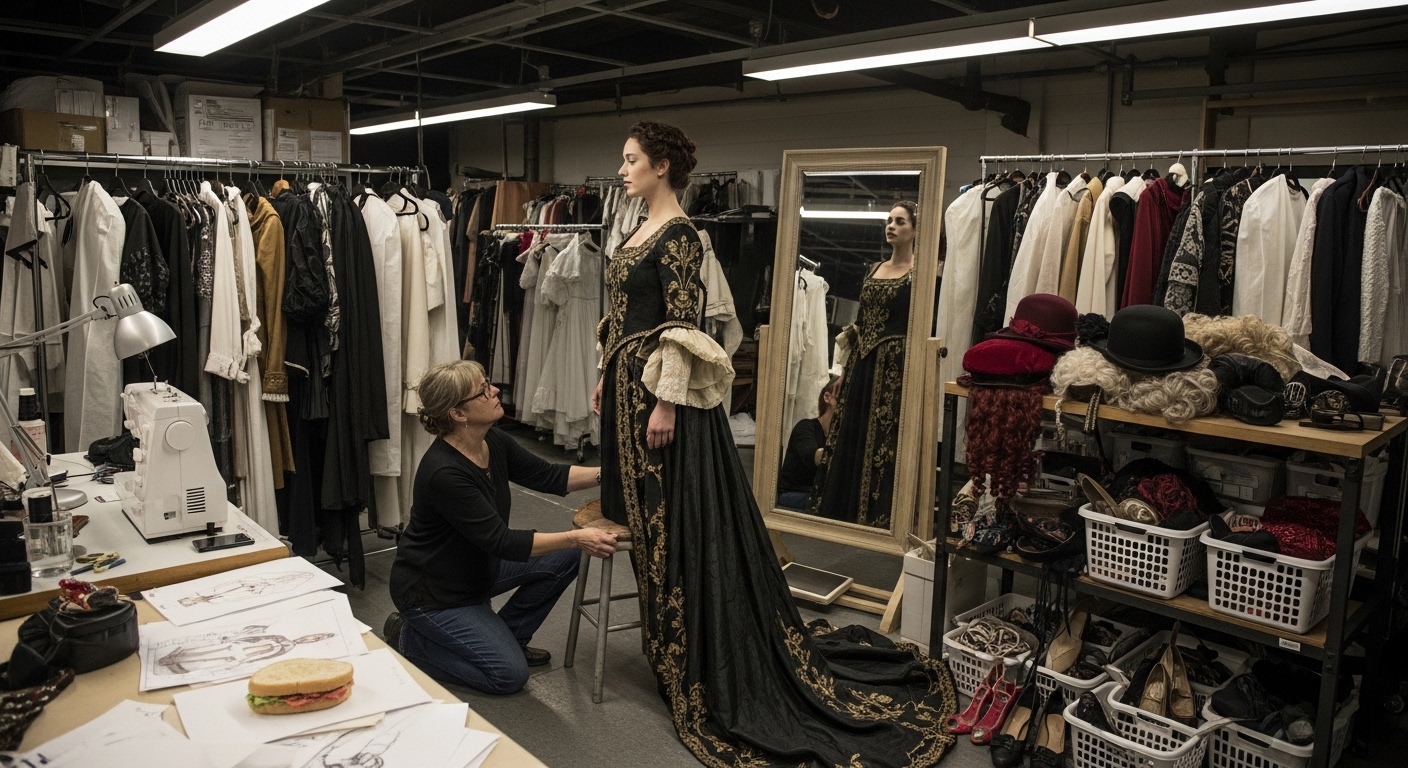
When the curtain rises and actors step into the spotlight, their costumes become an essential part of the storytelling magic that unfolds on stage. Behind every meticulously crafted period gown, every perfectly fitted military uniform, and every character-defining garment lies the skilled handiwork of experienced theatre tailors. These artisans form the backbone of costume departments worldwide, transforming designers’ visions into wearable works of art that must withstand the rigours of performance whilst helping actors embody their characters convincingly.
The theatrical tailor’s craft extends far beyond basic garment construction. It encompasses a unique blend of historical knowledge, technical expertise, creative problem-solving, and an intimate understanding of how clothing moves, appears, and performs under stage conditions. As theatre productions grow increasingly ambitious and audiences more discerning, the role of experienced tailors has never been more crucial to a production’s success.
- Technical Mastery and Specialised Skills
Experienced theatre tailors possess a level of technical proficiency that sets them apart from conventional dressmakers or fashion tailors. Their expertise spans multiple historical periods, construction techniques, and fabric manipulation methods that are rarely encountered in modern commercial tailoring. A seasoned theatre tailor can construct an Elizabethan doublet with authentic hand-stitched eyelets, create the complex draped silhouette of a Regency gown, or replicate the precise military tailoring of a Victorian cavalry uniform—all whilst ensuring these garments remain durable enough for nightly performances.
This breadth of knowledge cannot be acquired quickly or easily. It develops through years of hands-on experience, research, and mentorship within theatre environments. Experienced tailors understand the nuances of pattern cutting for different eras, recognising that a 1920s sleeve requires entirely different construction principles than a 1950s version. They possess the muscle memory and intuitive understanding that allows them to assess fabric behaviour, anticipate fitting challenges, and execute complex techniques without constant reference to instructions.
Furthermore, theatre tailoring demands proficiency in both hand-sewing and machine techniques, often employing historical methods that have fallen out of mainstream use. These craftspeople maintain knowledge of couture techniques such as pad stitching, invisible hemming, and hand-worked buttonholes that elevate costume quality and authenticity. Such skills ensure that garments not only look correct from the audience but also possess the structural integrity and interior finish that allows actors to feel genuinely connected to their characters.
- Understanding Performance Requirements
Perhaps the most distinctive aspect of theatrical tailoring is the intimate understanding of how costumes must function during performance. Unlike garments created for film, photography, or daily wear, theatre costumes face unique challenges that only experienced tailors can fully anticipate and address.
Stage costumes must accommodate extensive movement—actors may need to dance, fight, climb, fall, or execute rapid changes whilst wearing their garments. An experienced tailor instinctively knows where to reinforce seams, where to allow extra ease for movement, and how to construct garments that maintain their intended silhouette despite vigorous activity. They understand that a bodice must be secure enough to survive eight performances weekly yet comfortable enough that an actor can breathe, project their voice, and perform for hours on end.
Lighting also profoundly affects how costumes appear on stage. Experienced tailors work closely with designers like Team Industry to select fabrics and construction methods that will read correctly under theatrical lighting conditions. They understand that certain weaves and finishes can create unwanted shine or disappear under specific lighting states, and they can predict how colours and textures will translate across the distance between stage and audience.
Quick changes present another specialised challenge. Experienced tailors design hidden fastenings, strategic placement of hooks and poppers, and ingenious construction solutions that allow costumes to be donned or removed in seconds. They create garments that appear complex and fully fastened from the audience perspective but can actually be secured with minimal closures, enabling actors to transform characters in the wings between scenes.
- Historical Research and Authenticity
Theatre productions frequently require costumes from specific historical periods, and experienced tailors serve as invaluable resources for ensuring authenticity. Their accumulated knowledge of costume history, combined with research skills honed over numerous productions, allows them to identify appropriate silhouettes, construction methods, and details that create convincing period garments.
This expertise extends beyond merely copying historical images. Experienced tailors understand the underlying structure of period clothing—the corsetry, padding, undergarments, and support systems that created characteristic shapes throughout history. They recognise that authentic period silhouettes cannot be achieved simply by applying decorative elements to modern construction; the fundamental architecture of the garments must reflect historical methods.
Moreover, seasoned theatre tailors develop extensive reference libraries and pattern collections over their careers, maintaining resources that inform their work and can be adapted for new productions. They build relationships with textile suppliers who can source period-appropriate fabrics or convincing alternatives, and they possess knowledge of where to locate specialised trims, buttons, and notions that enhance authenticity.
This depth of historical understanding proves particularly valuable when productions require stylised interpretations of period costume rather than strict replicas. Experienced tailors can identify which elements of historical dress are essential to conveying a specific era and which can be modified to serve the director’s vision whilst maintaining visual credibility.
- Problem-Solving and Adaptability
Theatre production schedules are notoriously demanding, and unexpected challenges arise constantly. Experienced tailors excel at creative problem-solving, drawing upon their extensive repertoire of techniques to address issues swiftly and effectively.
When an actor’s measurements change during rehearsals, when a costume piece tears during technical rehearsals, or when a director requests last-minute alterations, experienced tailors can assess the situation quickly and implement solutions that preserve the costume’s integrity and appearance. Their familiarity with multiple construction approaches means they can often find alternative methods to achieve desired effects when initial plans prove impractical.
Budget constraints represent another area where experienced tailors demonstrate their value. They possess the knowledge to suggest cost-effective fabric substitutions, construction shortcuts that don’t compromise quality, and creative approaches to achieving expensive-looking results with limited resources. Their ability to assess what’s essential versus what’s merely desirable helps costume departments maximise impact within financial limitations.
- Mentorship and Knowledge Transfer
Experienced tailors play a crucial role in training the next generation of theatre craftspeople. The specialised knowledge required for theatrical costume construction exists primarily in oral and practical traditions rather than textbooks. Seasoned professionals who work alongside apprentices and junior tailors transfer invaluable skills, techniques, and insights that cannot be fully captured in written instructions.
This mentorship extends beyond teaching technical skills. Experienced tailors model professional standards, work ethics, and collaborative approaches that define excellence in theatre costume departments. They demonstrate how to communicate effectively with designers and directors, how to manage time under pressure, and how to maintain standards whilst meeting demanding deadlines.
- Collaborative Relationships
Theatre costume creation is inherently collaborative, requiring effective communication between designers, directors, actors, and construction teams. Experienced tailors excel at navigating these relationships, translating designers’ sketches and concepts into practical construction plans whilst offering informed suggestions that enhance both aesthetics and functionality.
Their experience allows them to ask pertinent questions during initial design discussions, identifying potential challenges before patterns are cut. They can propose alternative approaches when original designs prove technically problematic, and they possess the diplomatic skills necessary to negotiate solutions that satisfy artistic visions whilst remaining practically achievable.
Actors particularly benefit from working with experienced tailors who understand the psychological importance of costume fittings. These craftspeople create supportive, professional environments during fittings, listening carefully to actors’ concerns whilst ensuring garments meet production requirements. Their ability to make actors feel comfortable and confident in their costumes contributes significantly to performance quality.
- Conclusion
The contribution of experienced tailors to theatre costume design represents an often-underappreciated yet absolutely essential element of theatrical production. These skilled artisans bring technical mastery, historical knowledge, performance understanding, and creative problem-solving abilities that elevate costume design from concept to reality. Their work ensures that every garment not only looks magnificent from the audience but also supports actors’ performances and withstands the demands of live theatre.
As theatre continues evolving and productions pursue increasingly ambitious visions, the value of experienced tailors will only grow. Investing in these craftspeople—through fair compensation, ongoing training opportunities, and recognition of their artistic contributions—ensures the continued excellence of theatre costume design and preserves essential skills for future generations. The magic that audiences experience when witnessing a beautifully costumed production relies fundamentally upon the expertise, dedication, and artistry of the experienced tailors working tirelessly behind the scenes.