


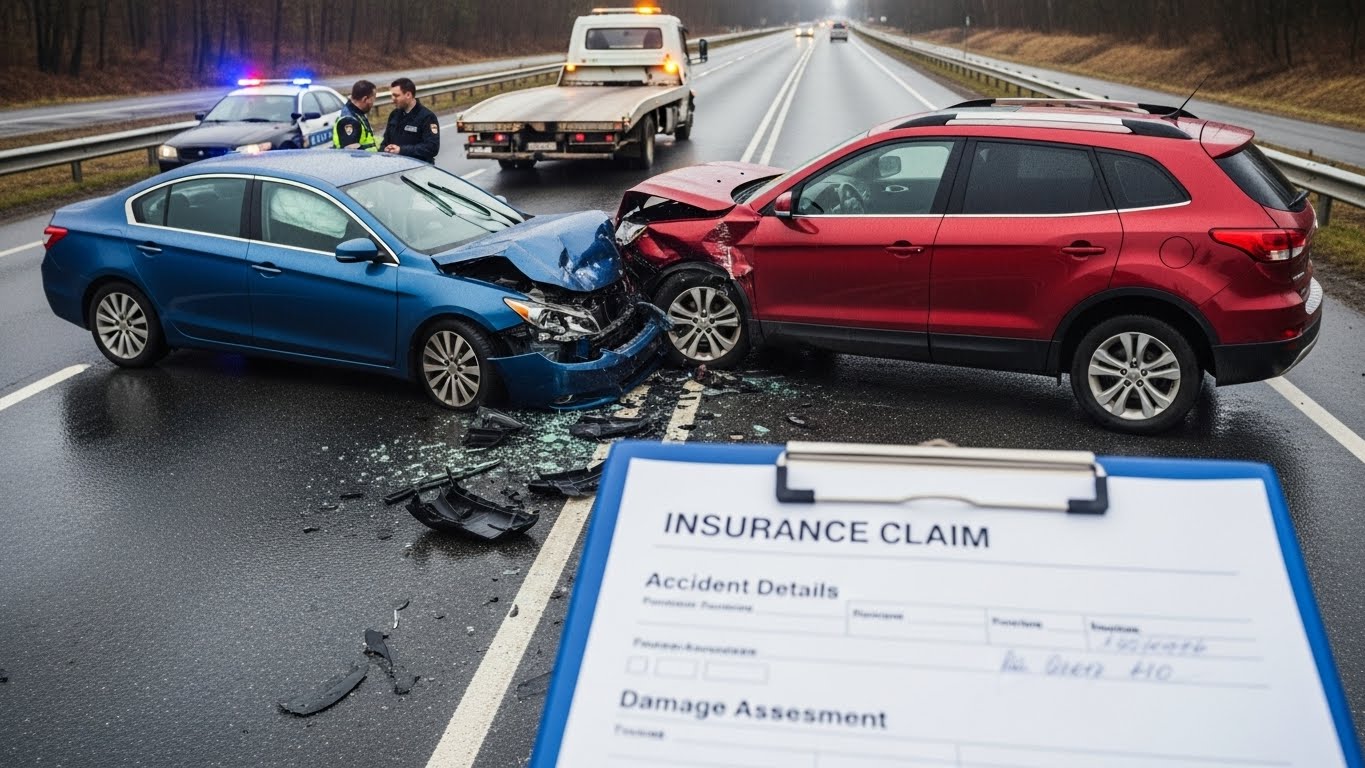
When you’re hit by an out-of-state driver, the process may seem more complicated, but most claims still follow standard rules.
A car accident is stressful enough, but it can feel even more complicated when the other driver is from another state. People often worry the driver will “go back home” and the claim will become impossible, or that they’ll have to travel to another state to handle everything. In most cases, you can still pursue a normal injury claim even if the at-fault driver lives elsewhere. The key is understanding how insurance, jurisdiction, and evidence work when an out-of-state driver is involved.
Out-of-state cases can still take longer than usual, mainly because there may be more insurance coordination and more steps to confirm coverage and contact information. Still, many of these cases resolve without major disruption when handled correctly. If you’re dealing with an accident like this, Dollar, Burns, Becker & Hershewe can help you protect your claim, communicate with the right insurers, and avoid delays that come from cross-state complications.
The Driver’s Address Doesn’t Change The Basic Fault Rules
The most important fact is usually where the crash happened, not where the other driver lives. If you were hit in Missouri, Missouri rules typically control how the crash is investigated and how the injury claim is evaluated. Liability still depends on evidence like the police report, photos, witness statements, and traffic laws.
Out-of-state drivers still have to follow local road rules while driving through your area. Their home state driver’s license does not give them different rights on the road. So the core issue remains the same: who caused the crash and what losses resulted.
Insurance Usually Follows The Vehicle, Not The Driver’s Home State
In most situations, the at-fault driver’s auto insurance is still the first source of payment, even if the policy was purchased in another state. Auto policies usually cover the driver while traveling, and insurers handle out-of-state crashes regularly. The claim process may involve the insurer’s out-of-state adjuster or a local representative, but coverage is still coverage.
That said, policy limits, definitions, and coverage details can differ depending on the state where the policy was issued. This can affect how quickly the insurer responds and what documents they request. Even so, most claims can be handled by phone, email, and records without requiring you to travel.
You Usually Can File The Claim Where The Crash Happened
A big question in out-of-state cases is jurisdiction—meaning where legal action would happen if the case doesn’t settle. In many situations, a lawsuit can be filed in the state where the crash occurred because that’s where the events happened and where evidence and witnesses are located.
This matters because it often means you do not have to chase the at-fault driver to their home state. It also helps keep the case in a location that is easier for you to manage. While jurisdiction can be complex in certain situations, the general rule is that the accident location has strong legal weight.
Service Of Process And “Finding The Driver” Is Usually Manageable
Some people worry they won’t be able to find the other driver once they go home. But most cases do not depend on tracking a person down on your own. Police reports typically contain identifying information, including a driver’s license number, address at the time, and insurance details. Insurance companies also have policyholder records that help confirm identity.
If a lawsuit becomes necessary, there are formal methods for serving legal papers across state lines. While that can add time, it is a routine process. The key is having accurate information early and preserving documents so the other side cannot later claim confusion about identity or involvement.
Medical Treatment And Documentation Stay Local
Even when the at-fault driver lives elsewhere, your medical care typically happens where you live. Your treatment records, bills, and doctor opinions become the foundation of your damages claim. That means your claim can still be built locally with your providers and your timeline of care.
What may change is how the insurer evaluates your claim. Out-of-state adjusters sometimes request extra documentation, especially if they are not familiar with local providers. This makes organized records even more important—clear medical notes, consistent treatment, and proof of wage loss.
Your Own Insurance May Still Matter
In some cases, the at-fault driver’s coverage may be low, delayed, or disputed. If your damages are high, your own policy may become important through underinsured motorist coverage. This is common when the out-of-state driver carries minimal limits that don’t match the cost of serious injuries.
Your policy may also provide medical payment coverage or other benefits depending on what you carry. Understanding the layers of coverage can be essential in out-of-state claims because the best recovery sometimes comes from combining the right sources rather than relying on one insurer to do the right thing quickly.
Delays Are Often About Paperwork, Not The Driver’s Location
When out-of-state claims take longer, it’s often because of paperwork and communication, not because the driver lives far away. Adjusters may need extra time to confirm policy information, coordinate with other insurers, or obtain statements. There may also be delays getting records, especially if there are multiple parties or injuries.
Still, these delays are often manageable when the claim is organized. Keeping a complete file—police report, photos, witness contact info, medical records, bills, and wage-loss proof—can reduce “back and forth” and help keep the claim moving.
Special Situations: Rental Cars, Commercial Vehicles, And Multiple Drivers
Out-of-state accidents often involve rental cars, business travel, or commercial drivers. These situations can add layers of insurance and legal responsibility. For example, a rental may involve the driver’s personal policy, the rental company’s coverage, and possibly a credit card benefit. Commercial travel may involve an employer policy as well.
When multiple insurance policies may apply, the claim can take longer because insurers argue over who pays first. These cases often benefit from early investigation and careful tracking of coverage details so you don’t miss potential sources of compensation.
Out-of-State Drivers Don’t Cancel Your Rights
Getting hit by an out-of-state driver can feel intimidating, but most claims can still be handled normally. In many cases, the crash location controls the process, the driver’s insurance still applies, and you can pursue your claim without traveling to another state.
The most important steps are documenting the crash, getting medical care, keeping records, and staying organized. With the right approach, out-of-state complications can be managed, and you can still pursue fair compensation for what the accident has cost you.