


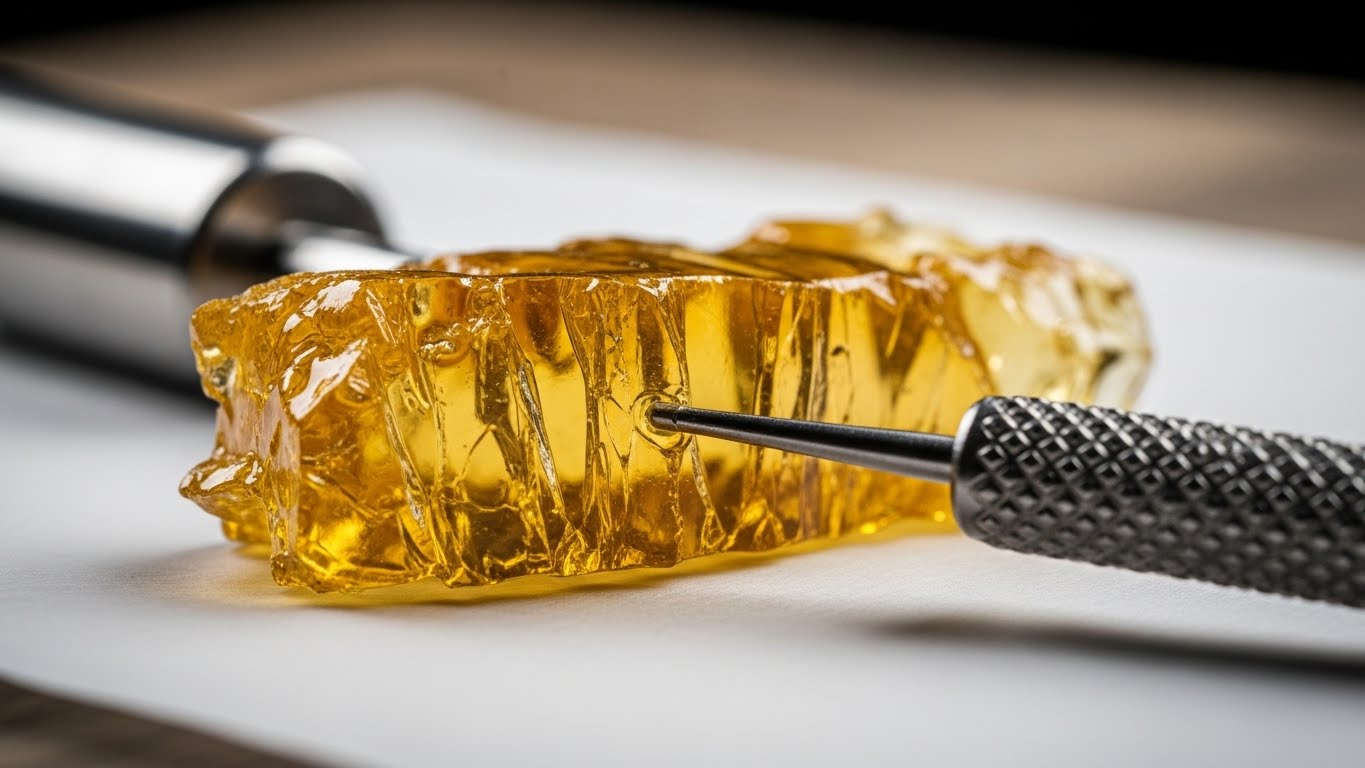
Understanding the differences between solvent vs. solventless concentrates will help you find the tastiest and purest extract that matches your preferences. The method of extraction plays a big role in a concentrate’s flavor, purity, and composition. Some consumers prefer solvent-based extracts, and others prefer solventless marijuana or hemp concentrates.
Solventless concentrates are considered a more natural extract of the cannabis plant. Concentrates extracted with solvents may contain trace residues. Solvents generally give commercial extractors the ability to produce higher yields.
Below are some key distinctions between solvent and solventless cannabis extractions to help you make an informed choice:
Solventless Extraction: Purity and Craft over Chemistry
Solventless extraction avoids the use of chemical solvents. Instead, this group of methods uses mechanical, thermal, or water-based techniques to isolate cannabinoids and terpenes. This offers peace of mind for many consumers.
1. Rosin Pressing: Flagship Solventless Method
Rosin pressing remains the most well-known and widely adopted solventless technique. Heat and pressure are applied to cannabis material, such as flower, dried bubble hash, or kief, to squeeze the resin out of the trichomes. Because no solvents are involved, there’s no risk of chemical residue winding up in the final concentrate.
High-quality rosin presses, such as those designed by Lowtemp Industries, ensure consistent yields and flavor. Their precision-engineered, modular press system is designed for efficiency and repeatability. This provides users with the ability to produce top-tier rosin extracts consistently, resulting in a superior final product that meets the highest standards of quality and potency.
Each component is built to maintain stable pressure and temperature throughout the pressing cycle, reducing material loss and ensuring even extraction. Lowtemp’s equipment also allows operators to fine-tune settings for specific strain characteristics, resulting in optimized terpene retention. This level of craftsmanship yields cleaner, more flavorful concentrates, ready for direct consumption.
2. Ice Water Hash & Dry Sift
These methods separate trichomes mechanically, without the use of heat. Ice water extraction uses cold agitation and micron filtering to capture clean trichome heads. Dry sift (also known as kief separation) involves sieving plant material over fine screens to collect the trichomes.
Though more labor-intensive than rosin pressing, these methods preserve aromatic compounds and yield clean base material for further pressing or direct use.
3. Dry Ice Extraction
Dry ice extraction is a modern solventless method that uses frozen carbon dioxide (CO₂) to isolate trichomes quickly and efficiently. When cannabis is exposed to dry ice, the extreme cold makes trichomes brittle, allowing them to break off easily with gentle agitation. The frozen trichomes are then collected through mesh filters, similar to the dry sift method.
A recent study demonstrated that the dry ice method effectively extracts trichomes from fresh cannabis with minimal terpene degradation. However, keep in mind that the final extract is typically “greener” due to the trichomes being split apart during the process. This makes dry ice extraction an effective way to retain both potency and aroma without chemical intervention, especially for home applications in which a clean flavor isn’t as essential.
Solvent-Based Extraction: Efficiency, Scale, and Control
Solvent-based methods remain dominant in industrial settings due to speed, scalability, and process control. These methods involve dissolving cannabinoids into a liquid or supercritical medium, followed by the recovery of the solvent for reuse. They produce especially potent concentrates.
4. Supercritical CO₂ Extraction
In this method, carbon dioxide is pressurized and heated into a supercritical state where it behaves like both liquid and gas. It dissolves cannabinoids and terpenes, then returns to gas form when pressure is released, leaving a clean extract.
CO₂ extraction is one of the safest solvent methods, because CO₂ is non-toxic and leaves no chemical residue. Operators adjust pressure and temperature to target specific compounds, offering flexibility. However, achieving the best results requires careful calibration of these variables to maximize both yield and product quality.
5. Hydrocarbon Extraction
Hydrocarbon extraction uses low-boiling solvents such as butane or propane. The solvent passes through the plant material, dissolves cannabinoids and terpenes, and then is purged via vacuum ovens or heat. The result is potent concentrates like live resin, shatter, or diamonds.
This method yields high potency and strong flavor retention when properly executed. The main caveat is safety: hydrocarbon extraction requires sealed systems, ventilation, and strict controls because the solvents are flammable. This means ensuring proper airflow by working in well-ventilated areas, such as open spaces with windows or doors (page 6), or by utilizing effective ventilation systems.
Important: Hydrocarbon extraction should never be attempted at home. It is only safe when performed by professionals using closed-loop equipment in C1D1 rooms.
6. Ethanol Extraction
Ethanol extraction involves dissolving cannabinoids and terpenes in alcohol. After extraction, the ethanol evaporates, leaving a concentrated solution. This method is common in medicinal and large-scale processing because ethanol is relatively safe, cost-effective, and scalable.
One limitation is that ethanol may co-extract chlorophyll, waxes, and other unwanted compounds. These impurities require post-processing steps such as winterization and filtration to remove.
What Consumers Should Know
For consumers, understanding how a cannabis concentrate is extracted is key to making informed choices about safety, flavor, and quality. Not all concentrates are created equal. In fact, each extraction method leaves a unique fingerprint on the product’s taste, texture, and purity.
Purity: Solventless concentrates are highly regarded for their clean profiles. Since they use only heat, pressure, or mechanical separation, there’s no chance of chemical residue. These products are ideal for health-conscious consumers or medical patients who prefer natural, additive-free concentrates.
Flavor and aroma: The extraction method directly affects the extent to which the plant’s original terpene profile remains intact. Solventless options like rosin or ice water hash often deliver a richer, more nuanced flavor because the process preserves volatile compounds that give cannabis its distinctive scent and taste. For many enthusiasts, this sensory experience is just as important as potency.
Price vs. scale: Solvent-based extracts are often produced in higher volumes, which reduces cost but comes at the expense of small-batch craftsmanship. While these products are more affordable, they don’t always match the artisanal quality and purity found in carefully pressed rosin or hand-collected hash.
Lab transparency: Reliable testing is essential, especially for solvent-based products. Always look for brands that publish lab results showing residual solvent levels, cannabinoid potency, and terpene composition. Certificates of Analysis (COAs) should be available upon request or displayed on packaging. This transparency not only ensures safety but also helps consumers understand what they’re really getting.
The Perfect Concentrate for Your Taste Buds and Preferences
The perfect concentrate for your taste buds and preferences will depend on how it was extracted. Solventless and solvent-based processes each offer something different. Solvent extracts use chemicals to separate compounds from the cannabis plant, creating an extremely potent concentrate in large quantities.
Methods such as rosin pressing produce concentrates without the use of any chemical solvents. This means there is no chance of chemical runoff appearing in your marijuana extract. Ice-water extraction and dry sifting are gentle methods for isolating the trichomes from cannabis plant material, but they produce smaller quantities of concentrate.
Ultimately, the ideal cannabis concentrate is a matter of personal preference.