


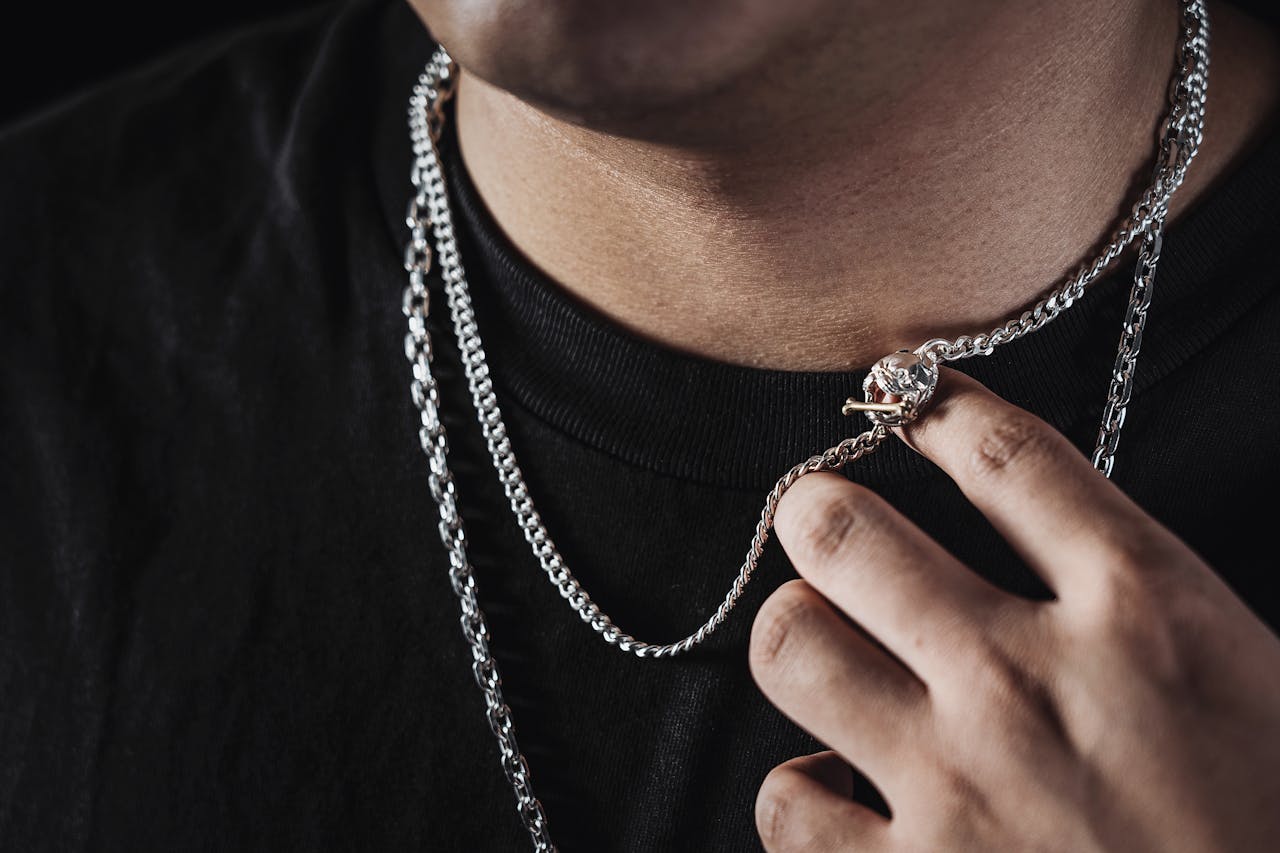
From rings to cufflinks to your watch, understanding how to wear men’s jewelry may give subtle touches that bring your ensemble together well – if done correctly.
In this guide, we show you how to wear different jewelry and how to look good in them.
Watches
Most men will want to invest in two fantastic timepieces: one for everyday usage and one for more formal occasions, as well as a Smartwatch to replace or supplement those. A watch is undoubtedly the most worn piece of jewelry in a man’s wardrobe, and when worn correctly, it has the ability to instantly improve your appearance.
There are several watch types and designs available for both casual and formal wear. Just a few general principles to follow: Wearing a watch on the opposite arm you write with is considered proper etiquette since it does not interfere with movement. Also, make sure it fits; you don’t want it dangling down your arm or it’s too tight that it looks like it’s blocking your circulation.
Rings
Except for a wedding band, which should always be worn to symbolize your commitment, there are specific ways to wear rings—and designs to keep to—if you want to pull it off with some swagger. If you work in a business setting, stick to one single-band ring in sterling silver, gold, or two-tone color with a simple design and minimum sparkle, and never wear it on your left-hand ring finger if you are not engaged or married.
If you’re tempted to do more, try a stacked style (meaning—three or more rings on one finger or distributed over many fingers) to wear in a casual situation, and be sure to carry the look with confidence that people would want to copy.
Cufflinks
Cufflinks are both useful and expressive, making them an essential accessory for French-cuffed shirts. Simple cufflinks, regardless of style, are always suitable.
Because you can buy distinctive men’s cufflinks in a range of styles, you should exercise caution when selecting a cufflink for a certain event. Remember, this modest item should not be the focal point of your ensemble. Again, simplicity is important.
Cufflink Styles:
Hinged-back cufflinks are one of the most popular types. One side is the ornamental, while the other side features a hinged bar that fits over the cufflink to secure it to the shirt. Once through, it hinges 90 degrees to hold the cufflink in place.
Push through – Similar to the hinged back, these feature one ornamental side. The other is a hard ball, “T,” or other tiny caps that prevent the cufflink from sliding back through the cuff’s holes.
Chain cufflinks are distinguished by a short chain linking the two sides, as opposed to a rigid bar. If you prefer chain cufflinks, be sure to specify this when buying custom shirts, as they do not hold the cuff as firmly as the others.
Snap-on cufflinks consist of either two independent components or one piece that wraps around the cuff near the holes.
Double-sided – A push-through, chain, or snap cufflink with embellishment on both sides
Chains, Tacks And Tie Clips
The purpose of these accessories is to protect your tie from getting blown over your shoulder by the wind when outside. Each has its look and purpose.
Tie Tacks – Tie tacks can add a wonderful touch to a certain color or pattern, but they can destroy your tie because they need you to poke a hole through it. Knowing this, you should use them carefully.
Tie Clips – Aside from keeping a man’s appearance together while on the road, tie clips offer a stylish touch to a well-dressed attire. They also provide the office worker with a more professional appearance. The most appropriate colors for a tie clip are often gold or silver, although other colors are okay as long as they complement the rest of the outfit.
Tie Chains – Similar to tie clips, tie chains perform the same purpose but with a drooping chain instead of a straight bar.
Necklaces
There is a common misconception that the necklace must be the focal point of an ensemble, but this is just incorrect. A necklace, like a tie, may give a modest pop to your outfit while drawing attention to the neck.
Some necklaces may have religious implications, thus, it is important to understand the many types of men’s necklaces available and how to wear them. Here are a few:
Chains – Chain necklaces are quite fashionable now. If you prefer chain necklaces, there are several lab grown diamond jewelry available. Alternatively, plain, unadorned metal chains are a traditional masculine accessory. The most common chain necklace features relatively flat loops close together, giving the chain the illusion of a solid ribbon of metal, and is long enough to hang just below the collarbone.
Pendants – Although a general phrase, a pendant-style necklace refers to a single little decoration suspended from a reasonably long chain or cord resting below your neck. If you prefer simple yet classy pendants, there are several options available, including lab grown diamond jewelry.
Bracelets
Here is where men’s jewelry differs considerably from women’s. Avoid bracelets with charms or pendants, particularly those in big, chunky styles. This piece of jewelry is an additional accent that should enhance, not overshadow, your outfit.
Whether you’re wearing a tank or a suit, you can’t go wrong with a metal bracelet or a strong leather alternative in a single band or, at most, a double wrap. These will offer a basic touch and just enough edge to an otherwise simple ensemble.
When is too much too much jewelry?
The most important aspect of any accessory or piece of jewelry is that it complements the clothing rather than detracting from it.
The suit is the most significant aspect of any formal dress. Everything else – the tie, belt, shoes, and pocket square – is meant to complement it.
Moderation and subtlety are essential for creating a traditional, formal, well-put-together style. Rather than wearing three rings, a watch, and a bracelet, consider trimming back to make it more discreet.
When worn correctly, accessories can elevate an ensemble from decent to great.