


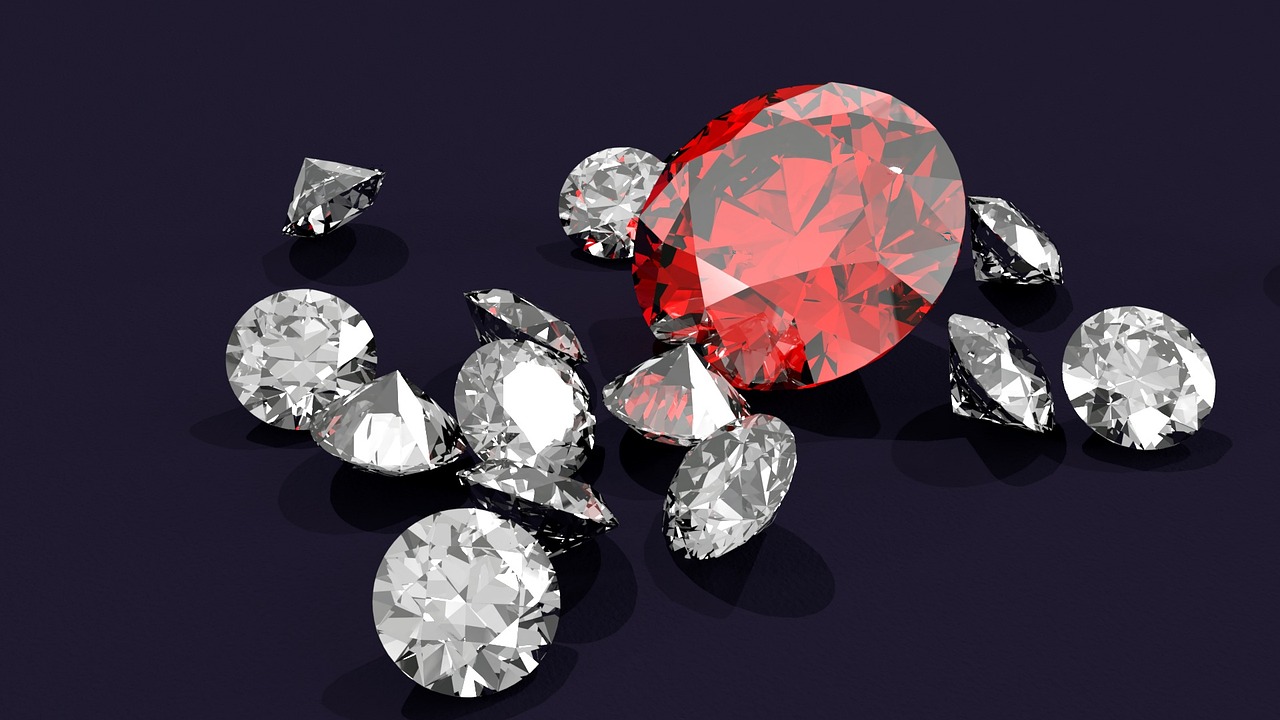
Diamonds have long captivated the hearts and minds of individuals seeking to express love, celebrate milestones, or make a timeless investment.
But, for first-time diamond buyers, it can be a daunting experience. No, thanks to the plethora of scams and factors that influence a diamond’s appearance, value, and desirability. As you embark on your journey to find the perfect diamond, it’s crucial to dispel common misconceptions about diamond size and cut.
This article will clarify the six most prevalent myths about diamond carat weight and cut quality. Understanding the facts will empower you to make the best selection when investing in a stone.
Myth 1: Bigger Is Always Better
It’s easy to assume that with diamond size, bigger is better.
However, cut quality and color clarity are equally important. A 2-carat diamond with visible inclusions (internal abnormality) and dull sparkle would be less desirable than a 1-carat stone with flawless clarity and optimal proportions.
A well-cut diamond with ideal proportions can appear bigger than a diamond of the same carat weight with a less favorable cut. When evaluating diamond size, consider the interplay of carat weight, cut, and shape to find the perfect balance that suits your liking.
Let your eye discern beauty, not just carat weight.
Myth 2: The Carat Weight Equals Size
While carat weight is a decisive factor in determining a diamond’s size, it’s not the sole determinant.
A diamond’s cut, which refers to the angles and proportions of its facets, impacts its visual appearance. Two diamonds of the same carat weight can visibly differ in size due to a difference in their cut. A well-cut diamond, even of a smaller carat weight, will often exhibit a larger face-up appearance, maximizing its sparkle and brilliance.
When purchasing online, especially, pay close attention to the stated dimensions to imagine the true appearance.
Myth 3: Diamond Cut Does Not Affect Diamond Value
Cut, often taken for granted by consumers, significantly influences a diamond’s brilliance, value, and perceived size.
While the market floods with options, distinguishing between real diamonds vs. fake becomes crucial. A superior cut helps you tell the difference. It also adds to the diamond’s beauty and can increase its desirability and price.
Diamonds with precise cuts, optimizing light reflection, are in high demand and hold greater value compared to poorly cut stones, irrespective of size or color.
Myth 4: Diamond Cut Is the Same as Diamond Shape
The cut and shape of a diamond are distinct attributes.
When discussing diamond cut, many people incorrectly think it means the shape of the stone (round, oval, pear, etc.). While a diamond’s external appearance is called its shape, the term cut actually refers to the stone’s internal and external proportions, symmetry, and polish. An excellent cut can enhance a diamond’s brilliance, irrespective of its shape.
Well-cut diamonds have greater sparkle since they interact optimally with light. Always examine the cut grade on a diamond’s certification for clarity. Leibish explains that when asking for a certification, ensure that it from trusted sources such as GIA, IGI, or AGS.
Myth 5: All Diamond Cuts Are Equal
Not all diamond cuts deliver the same level of brilliance.
The precision of the cut significantly influences how light moves within the stone. For instance, a well-cut round diamond tends to exhibit maximum brilliance due to its ideal proportions, whereas other cuts might vary in their sparkle based on their precision.
Graders evaluate round brilliant diamond cuts based on how closely the stone comes to having perfect proportions, showcasing peak brilliance and fire (rainbow of colors).
Understanding the nuances of popular diamond cuts and their unique characteristics can guide you in selecting a diamond that truly dazzles.
Myth 6: Diamond Clarity Gets Worse Over Time
Diamond clarity refers to the presence of inclusions and blemishes (external abnormality) on the diamond’s surface.
It’s a common misconception that diamond clarity gets worse over time. However, this is not entirely true.
In reality, a diamond’s internal inclusions and blemishes are permanently trapped within the stone when it forms geologically. Unless the diamond experiences extreme pressure or heat, these birthmarks remain static within the crystal structure forever. While surface scratches can occur with rough handling over time, the location and degree of naturally occurring inclusions remain constant.
You can feel assured that the stone’s clarity grade will not downgrade due to aging or typical daily wear over its lifetime. Your diamond will sparkle eternally, just as brilliantly as the day you purchased it.
To sum it up, buying your first diamond can be a delightful experience, but it’s crucial to approach the process with a clear understanding of the factors that influence a diamond’s appearance, value, and desirability.
Now that you know that bigger diamonds are not necessarily better, carat weight does not always equal size, cut influences sparkle and value, and clarity remains unchanged over time. You can focus on finding the stone that aligns perfectly with your preferences and priorities.
Remember, the perfect diamond is not always the biggest or the most expensive, but the one that speaks to your heart and reflects your unique style.